
Born from a forest
Kochi is the most heavily forested prefecture in Japan — around 84% of its land is forest. That single geographic fact explains the whole tradition. In the 17th century the Tosa domain pushed hard into forestry and land development, and that policy created enormous demand for axes, hatchets, sickles and billhooks. Smiths followed the work.
So while Sakai was refining knives for the emerging cuisine of the cities, Tosa was making tools for people working outdoors. Nobody in that market cared what the blade looked like. They cared whether it survived the day.
Kitchen knives came later, made by the same smiths using the same instincts. That is why a Tosa gyuto tends to feel thicker behind the edge and more solid in the hand than an equivalent from Seki: it is descended from a tool, not from a restaurant.
Free forging, and what it costs you
Jiyu-tanzo (自由鍛造), free forging, means the smith works without moulds or fixed patterns — the blade is hammered to shape by eye. Historically this was a commercial necessity: a village smith had to be able to make a sickle in the morning and a fish knife in the afternoon without retooling.
The honest consequence for a buyer is variation. Two Tosa knives of the same model can differ slightly in profile, thickness and weight. Some people love this and some people find it maddening. If you want two identical knives, that is what Seki exists for. If you want a knife that is unmistakably a made object, this is the appeal.
It also means Tosa is unusually good at unusual. Because nothing is tooled to a pattern, the region produces shapes the bigger centres do not bother with — outdoor and camp blades, agricultural tools, odd lengths — often to order.
Why the blade is black
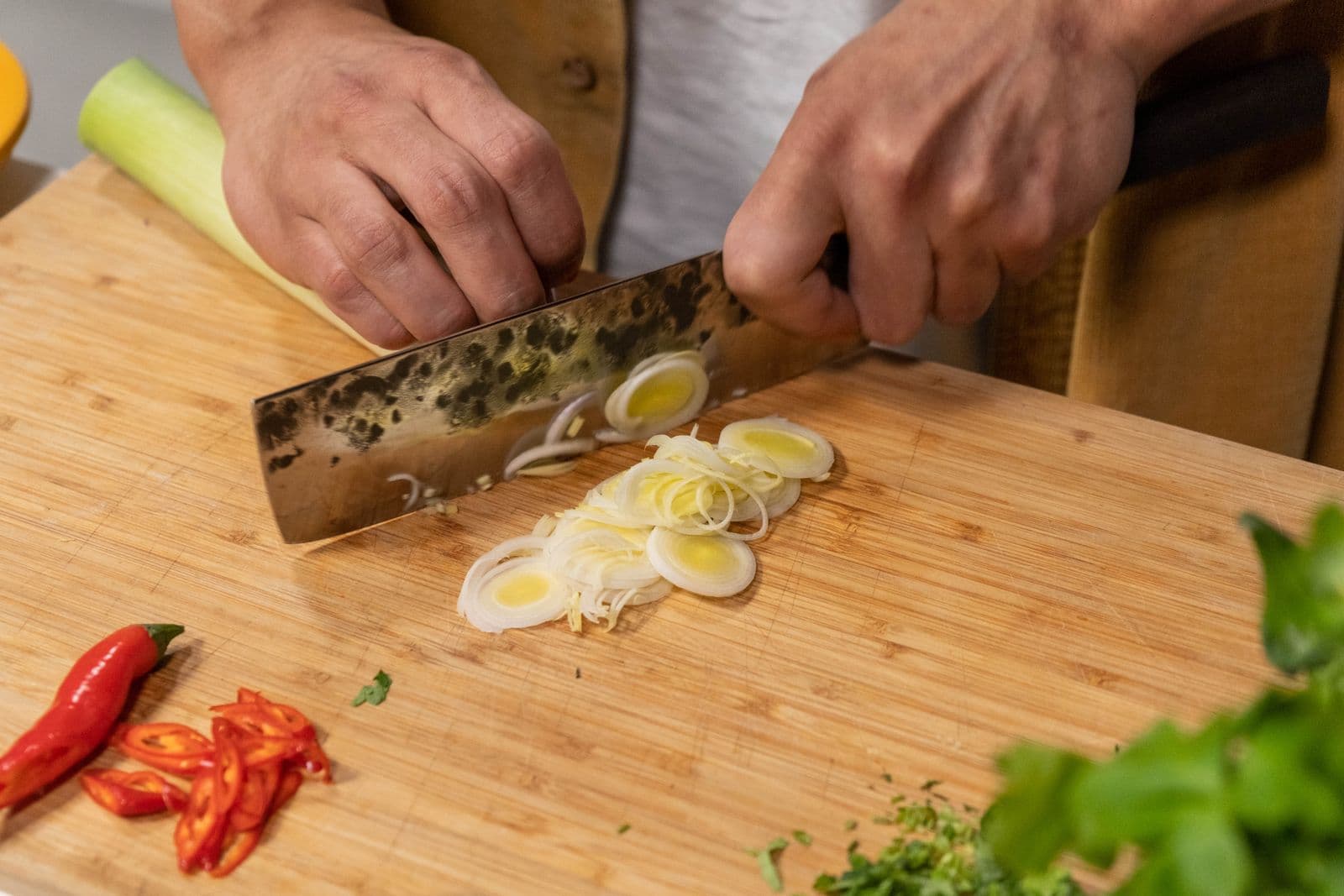
The black surface on a Tosa knife is kurouchi (黒打ち): the oxide scale that forms on steel during forging, left in place instead of being ground off. It is not paint, not a coating, and not a defect.
Leaving it on does two useful things. It saves a polishing stage, which is a real part of why Tosa knives cost less. And the scale gives the flats a little rust resistance — helpful on a carbon blade, though the exposed bevel still needs drying. Kurouchi wears away over years of use and sharpening, and a blade that has half worn through its finish is doing exactly what it should.
Why Tosa is the value region
Tosa consistently offers the most hand-forging per unit of money in Japan. The reasons are structural, not a compromise on steel:
- Less finishing. Kurouchi instead of polishing removes an expensive stage.
- Fewer hands. Unlike Sakai's three-specialist chain, a Tosa smith typically carries the blade further through the process alone.
- Tool heritage. The tradition never optimised for luxury presentation, so nobody is paying for it.
The steel itself is not the compromise. Tosa smiths work in Shirogami, Aogami and Aogami Super — the same carbon steels used at the top of the market.
What to expect from a Tosa knife
Expect a blade that looks forged: black flats, a visible transition where the cladding meets the core steel, a slightly irregular profile, and often a simple unlacquered wooden handle. Expect it to be carbon steel, which means it will develop a patina, discolour when it meets onion or citrus, and rust if you leave it wet in the sink.
None of that is a fault — it is the deal. If you dry the knife after use, a Tosa carbon blade sharpens beautifully and takes an edge most stainless cannot match. If you will not dry it, read this first and then consider a stainless knife instead. Being honest with yourself here matters more than the knife you choose.
Tosa vs the other three regions
| Sakai | Echizen | Seki | Tosa | |
|---|---|---|---|---|
| Best known for | Traditional single-bevel knives for Japanese cuisine | Hand-forged double-bevel knives with striking finishes | Consistent, precisely made Western-style kitchen knives | Tough, rustic, well-priced hand-forged blades |
| Signature knives | Yanagiba, deba, usuba | Gyuto, santoku, nakiri, bunka | Gyuto, santoku, petty, bread knives | Nakiri, gyuto, santoku, outdoor blades |
| Typical finish | Polished (migaki), kasumi | Kurouchi, tsuchime, damascus | Polished, damascus | Kurouchi (black forge finish) |
| Typical steels | Shirogami, Aogami, Ginsan | VG10, SG2, Aogami Super, Shirogami | VG10, AUS-8/10, SG2, molybdenum-vanadium | Shirogami, Aogami, Aogami Super |
| Character | Refined, exacting, built for daily professional use | Expressive and modern, without leaving hand-forging behind | Consistent and repeatable — the least variable of the four | Rugged and utilitarian — character over polish |
Who should buy from Tosa
Tosa if
- You want hand-forged carbon steel at a fair price
- You like a rustic, obviously-made object
- You will dry the knife after every use
- You want a tough blade rather than a delicate one
Look elsewhere if
- You want zero maintenance — buy stainless
- You want a flawless, uniform finish (Seki)
- You want a traditional single-bevel knife (Sakai)
- Consistency between two knives matters to you
Frequently asked questions
What are Tosa knives?
Tosa knives (土佐打刃物, Tosa uchihamono) are hand-forged blades from Kochi Prefecture, historically the province of Tosa. The craft was designated a national traditional craft in 1998. Its defining feature is free forging (jiyu-tanzo): blades are hammered to shape without fixed dies or patterns, so each one is made to its job rather than to a template.
What is jiyu-tanzo (free forging)?
Jiyu-tanzo (自由鍛造) means forging without moulds or fixed patterns — the smith hammers each blade to shape by eye and hand. Historically this let Tosa smiths make whatever a customer needed, from a sickle to a woodworking axe to a kitchen knife, without retooling. The practical consequence for a buyer is variation: two Tosa knives of the same model will differ slightly in profile and weight.
Why are Tosa knives cheaper than Sakai knives?
Mostly because of how they are finished. Tosa blades are typically left with their kurouchi black forge scale rather than being polished, and one smith usually takes the blade further through the process instead of handing it to a specialist sharpener. Less finishing labour means a lower price. It does not mean worse steel — Tosa smiths routinely use Shirogami and Aogami carbon steels.
Are Tosa knives good for beginners?
For a cook willing to look after carbon steel, yes — they are among the best value hand-forged knives in Japan, and a double-bevel Tosa nakiri or santoku is very approachable. The caveat is maintenance: most are reactive carbon steel and will rust if left wet. If you would rather not think about that, a stainless knife from Seki or Echizen is the safer first purchase.
Why is the blade black?
That is kurouchi (黒打ち) — the oxide scale left on the blade by forging. It is not a coating and it is not dirt. Tosa leaves it on because removing it costs labour, and because it offers a little rust resistance on the flats. It wears away with use and sharpening, which is normal.
Curated from Japan's four regions
Compare Tosa with Sakai, Echizen and Seki. Our curated shelf opens soon — join the waitlist to hear first.
The four great regions →