
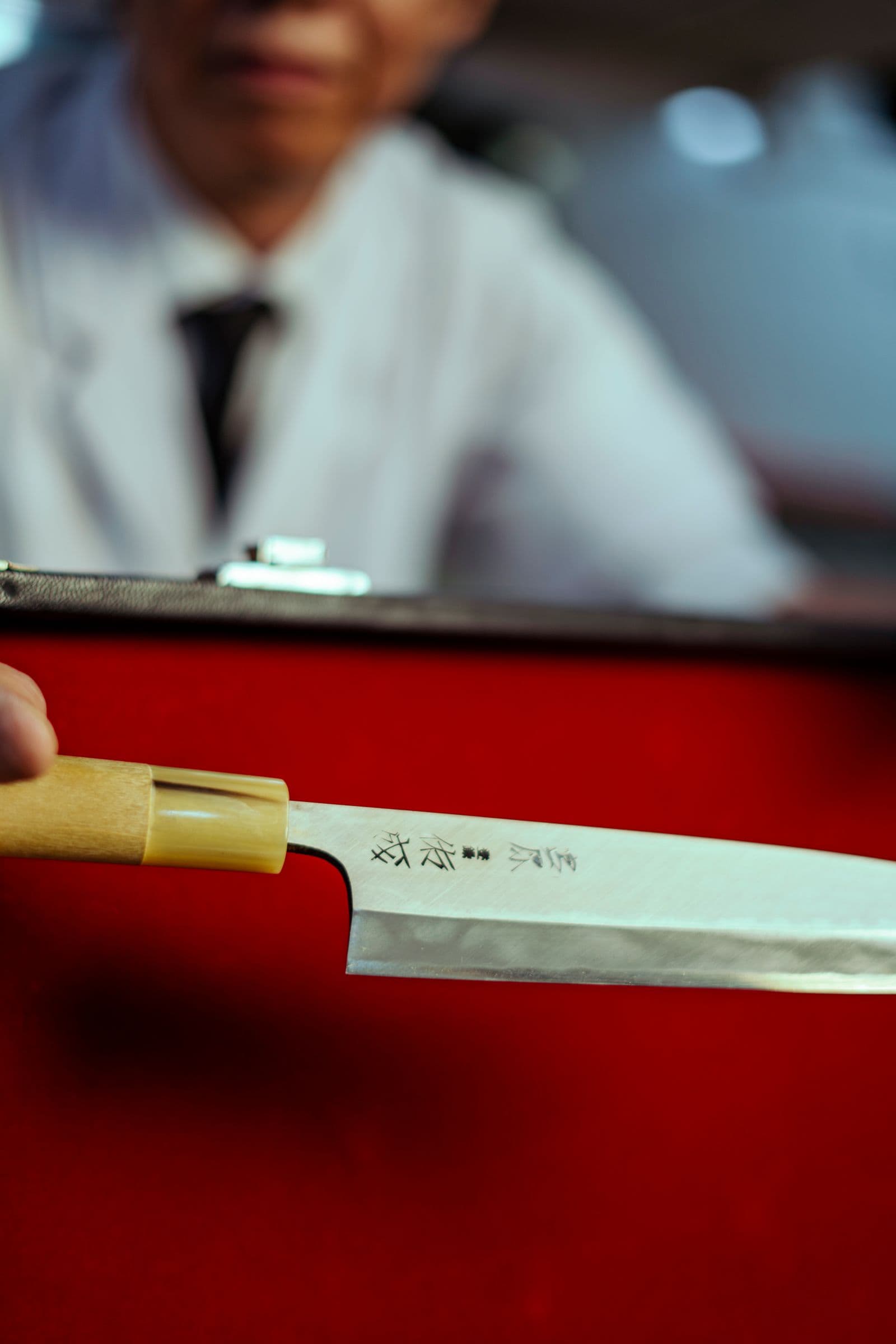
What is Aogami Super?
Aogami Super (青紙スーパー) sits at the top of Hitachi's blue-paper carbon steels. It starts from pure white steel and adds more carbon plus tungsten and chromium, which let it harden very high and resist wear. The result is a steel prized by carbon enthusiasts for holding a keen edge longer than almost anything else in its class — at the cost of being reactive and a touch fussier to sharpen.
Why it holds an edge
Two things drive its edge retention. It hardens to a very high HRC (around 64–66), so the edge resists rolling; and the added tungsten and chromium form hard, wear-resistant carbides that slow the edge from wearing away. Together they mean a Blue Super edge simply lasts — you sharpen less often than with white or blue #2.
Blue Super vs Blue #2 vs White
| Aogami Super | Aogami #2 | Shirogami | |
|---|---|---|---|
| Edge retention | Best | Very good | Good |
| Ease of sharpening | Hardest of the three | Moderate | Easiest |
| Ultimate keenness | Excellent | Excellent | Keenest |
| Toughness | Slightly less | Good | Good |
| Reactivity | Reactive | Reactive | Most reactive |
In short: Blue Super for the longest edge life, White for the easiest sharpening and keenest edge, Blue #2 as the balanced middle.
Care & sharpening
Treat Aogami Super like any reactive carbon steel: wipe it dry the moment you're done, let it develop a protective patina, and keep it out of the sink. When it's finally time to sharpen, use good whetstones and a consistent angle — it's a little harder than white but very workable, and you'll be doing it far less often. If red rust appears, it's easy to remove.
Is Aogami Super for you?
Yes if
- You want the longest edge life in a carbon steel
- You're happy to dry and care for a reactive blade
- You'd rather sharpen less often
- You enjoy the character of carbon steel
Look elsewhere if
- You want the easiest sharpening — white steel
- You want no maintenance — a stainless like VG10 or SG2
- You dislike patina and reactivity
- You're new and want low-fuss — start stainless
The bottom line
Aogami Super is the carbon steel you choose when edge retention is everything and care is no obstacle. It holds a keen edge longer than its siblings — you just have to keep it dry and let it patina.
New to steel choices? Start with VG10 vs Aogami vs Shirogami for the big picture.
Comparing steels side by side? Our knife steel table puts all 16 in one sortable chart — hardness, edge retention, toughness, rust resistance and how hard each is to sharpen.
Frequently asked questions
What is Aogami Super steel?
Aogami Super (青紙スーパー, 'Blue Super') is Hitachi's highest-performance blue carbon steel. It's white steel with added tungsten, chromium and more carbon, which lets it harden very high (around 64–66 HRC) and gives it the best edge retention of the common Japanese carbon steels. It's reactive, so it rusts and patinas and needs proper care.
Is Aogami Super the best carbon steel?
For pure edge retention among the common Hitachi carbon steels, yes — it holds an edge longer than Aogami #2 or the white steels. But 'best' depends on what you value: white steels are easier to sharpen and can take a marginally keener edge, and all carbon steels need care. Aogami Super is the choice when you want maximum edge life and don't mind maintaining a reactive blade.
Aogami Super vs Aogami #2 — what's the difference?
Both are blue carbon steels, but Aogami Super has more carbon and alloying, so it hardens higher and holds its edge noticeably longer. The trade-off is that it's a little harder to sharpen and, being harder, slightly less tough. Aogami #2 is a great all-round blue steel; Aogami Super is the step up for edge retention.
Aogami Super vs Shirogami — which should I pick?
Aogami Super (blue) holds its edge longer and is more forgiving of technique; Shirogami (white) is purer, sharpens more easily and can reach a slightly keener edge, but dulls sooner. Choose Blue Super for long edge life, White for ease of sharpening and ultimate keenness. Both are reactive carbon steels that need drying and care.
Does Aogami Super rust?
Yes — it's a carbon steel, so it rusts and reacts with acidic food unless cared for. Wipe it dry immediately after use, let it build a protective patina, and keep it out of the sink. With that routine it's very manageable; neglect it and it will spot with red rust. If you want carbon-like performance without the care, look at a powder stainless like SG2.
Is Aogami Super hard to sharpen?
A little harder than white steel because it's harder and has more alloying, but it's very manageable on good whetstones and holds its edge so long you'll sharpen it less often. Keep a consistent angle and use quality stones; the reward is a keen, long-lasting edge.
Choosing a knife by its steel?
Compare the steels and types side by side. Our curated shelf opens soon — join the waitlist to hear first.
The steel guide →