
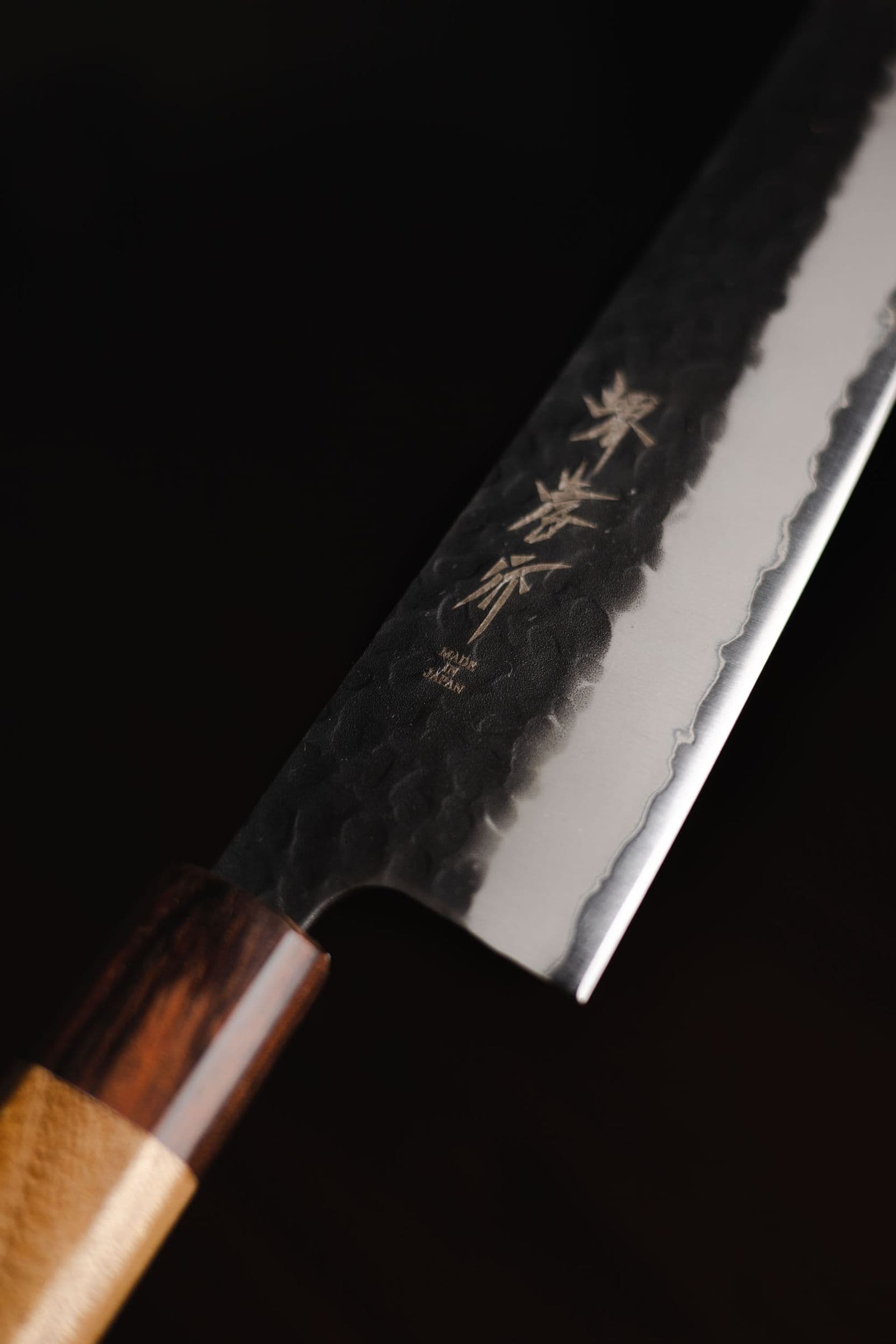
What reactivity means
Reactivity is simply how readily a steel reacts with acidic food and moisture. Carbon steels react — they discolour, patina and can rust if neglected — because they lack the chromium that makes stainless resistant. Among carbon steels, white steel is the most reactive and the blue steels a little less; stainless steels are essentially non-reactive. Reactivity isn't a flaw — it's the trade that comes with carbon's keen, easy-to-sharpen edge.
What patina is
As a reactive blade is used, it forms a patina: a stable film of oxide in shades of grey, blue and brown. Far from being damage, it's a protective layer that shields the steel underneath from red rust. A carbon knife with a settled patina is a healthy, well-used knife — many people find the way it ages one of the pleasures of owning carbon steel.
Building a patina
A patina builds on its own: just use the knife and dry it after each use, and it develops over the first weeks — blotchy at first, then settling into an even film. If you'd rather not wait (or dislike the patchy stage), you can force a patina by wiping the blade with mustard, vinegar or a cut onion, which darkens it evenly and gives protection from day one. Either way, the routine that matters is drying the blade — see carbon-steel care.
Patina vs rust
Patina good, red rust bad. Patina is the stable grey-blue film you keep; rust is the orange, flaky corrosion you remove — and a good patina actually helps prevent rust. Don't scrub patina off; it only exposes bare, rust-prone steel. If red rust does appear, it cleans off easily — see how to remove rust.
Should you worry about it?
Embrace carbon if
- You'll dry the blade after use
- You like a keen, easy-to-sharpen edge
- You enjoy a blade that ages with character
- A little patina care doesn't bother you
Prefer stainless if
- You want zero reactivity or patina
- You'd rather not dry it immediately
- You dislike discoloration on a blade
- Low maintenance is the priority
The bottom line
Reactivity is the price of carbon's keen edge, and patina is the payoff: a protective film that means a well-used carbon knife is a well-protected one. Keep the patina, remove only red rust, and dry the blade — that's the whole game.
Want none of it? A stainless like Ginsan or SG2 gives keen edges with no reactivity.
Frequently asked questions
What is patina on a knife?
Patina is the stable grey, blue or brown film that forms on a carbon-steel blade as it reacts with food and moisture over time. Unlike rust, it's desirable: it's a protective layer that actually helps shield the steel from red rust. A well-developed patina is a normal, healthy sign of a used carbon knife.
What does 'reactive' mean for a knife?
Reactivity is how readily a steel reacts with acidic foods and moisture. Carbon steels are reactive — they discolour, patina and can rust if neglected — because they lack the chromium that makes stainless steel resistant. White (Shirogami) steel is the most reactive; blue steels a little less; stainless steels are essentially non-reactive.
Is patina the same as rust?
No — they're opposites in effect. Patina is a stable, protective oxide layer (grey/blue/brown) that you keep; rust is the red or orange, flaky corrosion that damages the steel and that you remove. In fact a good patina helps prevent rust. Only the red rust needs cleaning off.
How do I build a patina?
Just use the knife and dry it after each use — a patina develops naturally over the first weeks, often unevenly at first, then settling into a consistent film. If you'd rather not wait, you can force one by wiping the blade with mustard, vinegar or a cut onion, which darkens it quickly and offers protection from the start.
Should I remove the patina?
No. Removing patina strips away a protective layer and exposes bare, rust-prone steel, so leave it. The only thing to remove is red rust. If the patina looks blotchy at first, that's normal — it evens out with use. Some people even force an even patina precisely because they value how it protects the blade.
How do I stop a reactive knife rusting?
Dry it immediately after every use, don't leave it wet or in the sink, let a protective patina build, and wipe on a thin film of food-safe oil before longer storage. With that simple routine even the most reactive carbon steels are easy to live with. If red rust appears, it cleans off easily.
Choosing carbon or stainless?
Compare the steels and types side by side. Our curated shelf opens soon — join the waitlist to hear first.
The steel guide →