
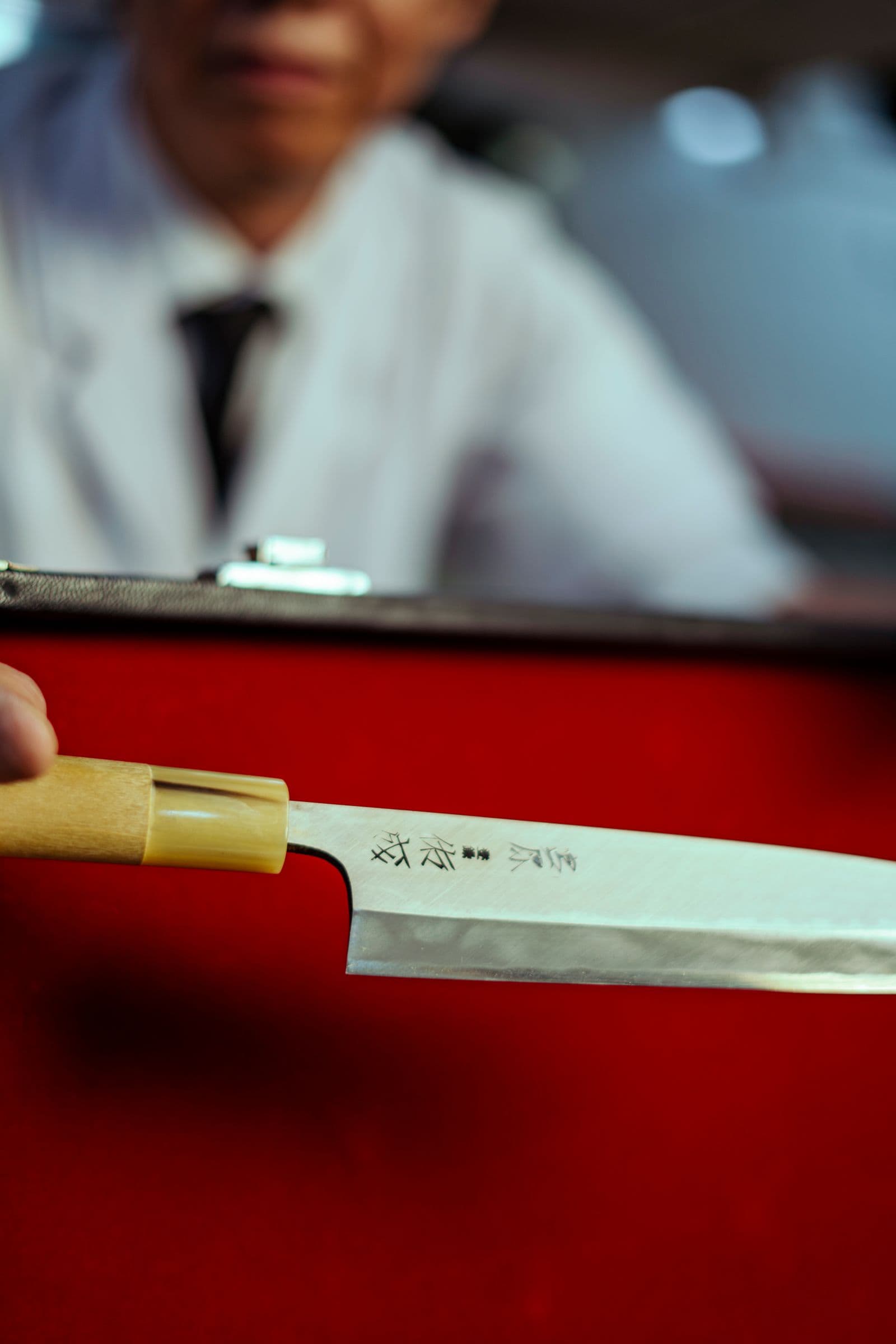
What is white steel?
Shirogami (白紙, named for the white paper Hitachi wraps it in) is about as simple as knife steel gets: iron and carbon, with almost nothing else. That purity is its superpower — a clean, fine structure that hones to a very keen edge and is a joy to sharpen. The catch is the flip side of purity: no rust-resisting chromium, so it's a fully reactive carbon steel that patinas and rusts if neglected.
What the numbers mean
The 1, 2 and 3 are about carbon content and purity, not a quality ranking. More carbon lets the steel harden higher, which raises keenness and edge retention but reduces toughness. So #1 (most carbon) is the keenest and a touch more brittle; #3 (least carbon) is the softest, toughest and easiest to sharpen, with the least edge retention; #2 sits in between and is the most common by far.
#1 vs #2 vs #3
| White #1 | White #2 | White #3 | |
|---|---|---|---|
| Carbon | Most | Middle | Least |
| Keenness | Keenest | Very keen | Keen |
| Edge retention | Best of white | Good | Least |
| Toughness | Least | Good | Toughest |
| Ease of sharpening | Easy | Easy | Easiest |
| Popularity | Enthusiast | Most common | Less common |
White vs blue steel
White steel's sibling is Aogami (blue) steel — the same base with tungsten and chromium added. Those additions buy more edge retention and toughness, at the cost of being slightly harder to sharpen. White stays keener and easier on the stones. So: white for sharpening ease and ultimate keenness, blue for longer edge life. See the full steel comparison for where stainless fits in.
Which should you choose?
White #2 for most
- The balanced, proven default
- Keen, tough enough, easy to sharpen
- What most white-steel knives use
- A great first carbon steel
White #1 if
- You chase the keenest possible edge
- You sharpen well and often
- You'll treat a slightly brittle edge gently
- (White #3 is rarely chosen over #2 by enthusiasts)
The bottom line
White steel is purity: the keenest, easiest-to-sharpen carbon steel, in exchange for reactivity and shorter edge life. Pick #2 unless you have a specific reason to want the extra carbon of #1.
Want longer edge life from a carbon steel? Look at Aogami Super. Prefer no maintenance? See SG2.
Comparing steels side by side? Our knife steel table puts all 16 in one sortable chart — hardness, edge retention, toughness, rust resistance and how hard each is to sharpen.
Frequently asked questions
What is Shirogami (white steel)?
Shirogami (白紙, 'white paper' steel) is a very pure Japanese carbon steel — essentially iron and carbon with almost no other alloying. That purity lets it take an exceptionally keen edge and sharpen very easily, but it's reactive, so it rusts and patinas and holds its edge for less time than a more alloyed steel like blue steel.
What do the numbers 1, 2 and 3 mean in white steel?
They indicate carbon content and purity. White #1 has the most carbon, so it hardens highest and takes the keenest edge, but is a little more brittle and demanding. White #2 has slightly less carbon — the balanced, most popular choice. White #3 has the least carbon, so it's softer and tougher and easiest to sharpen, but holds its edge for less time. Lower number means more carbon, not lower quality.
Shirogami #1 vs #2 — which is better?
Neither is simply better. White #1 reaches a marginally keener edge and holds it a touch longer because of its higher carbon, but it's slightly more brittle and less forgiving to heat-treat and sharpen. White #2 is a hair more forgiving and is the most common choice for a reason — it's the balanced all-rounder. For most people, White #2; for a keenness-chaser who sharpens well, White #1.
White steel vs blue steel — what's the difference?
White steel is pure carbon steel; blue steel (Aogami) is white steel with added tungsten and chromium. The additions give blue steel better edge retention and a bit more toughness, while white steel sharpens more easily and can take a slightly keener edge. Both are reactive carbon steels. Choose white for ease of sharpening and keenness, blue for longer edge life.
Is white steel hard to maintain?
It's reactive, so yes, a little — it rusts and patinas and must be dried immediately after use, kept out of the sink, and allowed to build a protective patina. In return it's one of the easiest steels to sharpen and takes a superb edge. If you want that keenness without the care, a stainless steel is the trade-off.
Which white steel should a beginner buy?
If you specifically want white steel, White #2 is the sensible starting point — the balance of keenness, toughness and ease that most knives use. But if you're new and want low maintenance overall, a stainless steel avoids the reactivity entirely; white steel is best chosen when you actively want a traditional carbon blade.
Choosing a knife by its steel?
Compare the steels and types side by side. Our curated shelf opens soon — join the waitlist to hear first.
The steel guide →