
First: rust vs patina
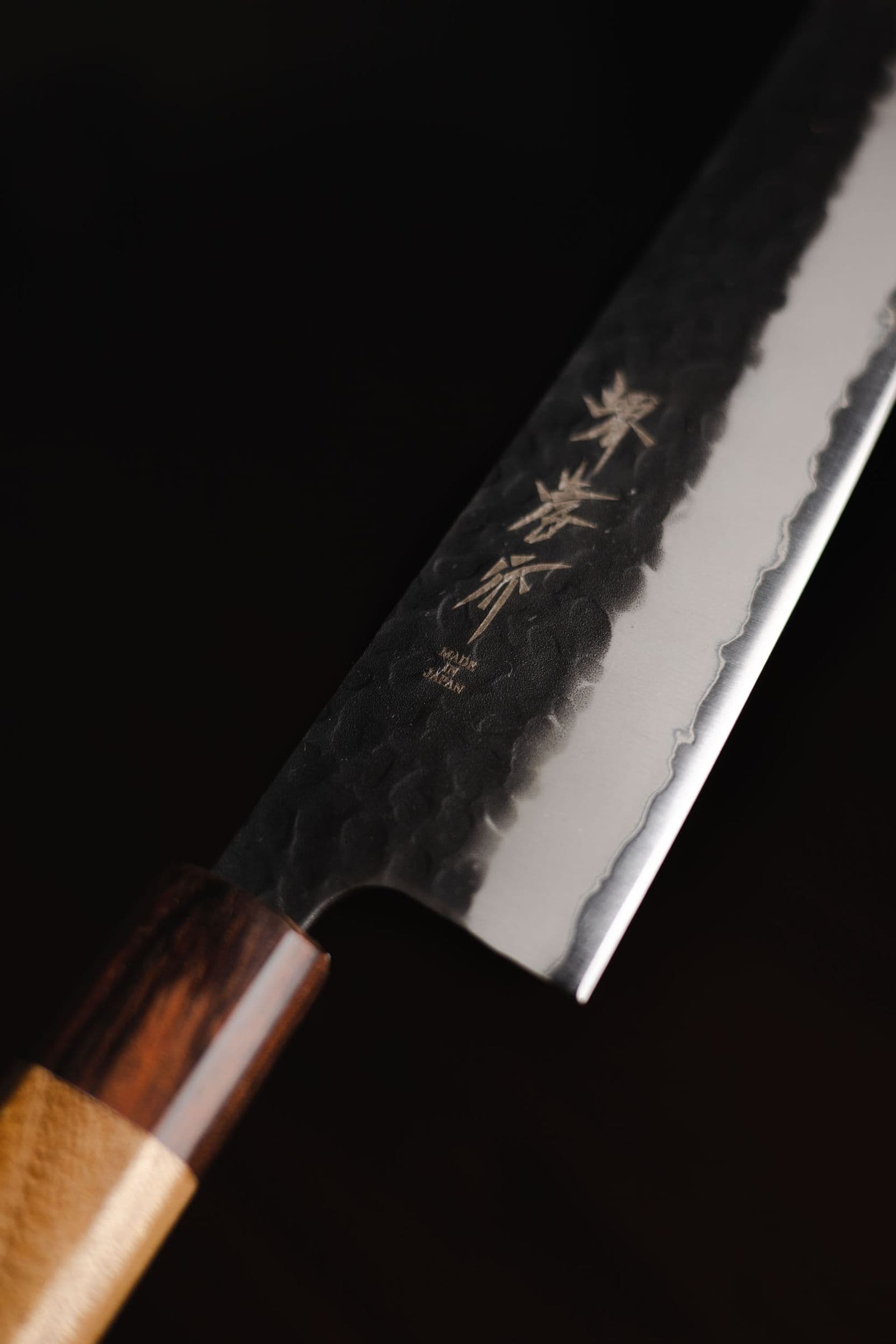
Before you scrub anything, know what you're looking at. A stable grey, blue or brown film is patina — it forms naturally on carbon steel and protects the blade, so leave it. Red or orange, flaky spots are rust: that's the corrosion you remove. Stripping patina off just exposes bare, rust-prone steel, so only target the red.
What you need
Almost everything is already in your kitchen: baking soda, water, and a wine cork or soft cloth. For tougher jobs, a rubber rust eraser or a tub of Bar Keepers Friend (oxalic acid) helps, and a little food-safe camellia or mineral oil protects the blade afterwards.
Step by step
Work gently and along the blade, in the direction of the edge — never scrub across it, and keep fingers clear of the edge.
Tell rust from patina
First check what you're dealing with. Red or orange, flaky spots are rust to remove. A stable grey, blue or brown film is patina — leave it; it protects the blade. Only remove the red rust.
Make a gentle abrasive
Mix baking soda with a little water into a paste. It's abrasive enough to lift rust but soft enough not to scratch the steel. A wine cork, the soft side of a sponge, or a cloth makes a good applicator.
Rub along the blade
Apply the paste and rub the rusted area gently, working along the blade in the direction of the edge (not across it), away from your fingers. Let the mild abrasive do the work rather than pressing hard.
Rinse and dry completely
Rinse the blade with warm water and dry it immediately and thoroughly with a towel. Any moisture left behind will start the rust again, especially on carbon steel.
Treat stubborn spots
For rust that won't budge, use a rubber rust eraser, or a stainless cleaner like Bar Keepers Friend (oxalic acid) rubbed on and rinsed off. As a last resort, very fine wet sandpaper (2000+ grit) with a little oil. Avoid coarse steel wool, which scratches.
Protect against a repeat
Dry the knife fully, then wipe a thin film of food-safe oil (camellia or mineral oil) over a carbon blade. Going forward, dry it immediately after every use, let a protective patina form, and store it dry.
Stop it coming back
Rust is a moisture problem, so the cure is dryness. Dry the blade immediately after every use, never leave it wet in the sink, and let carbon steel develop a protective patina. A thin wipe of food-safe oil helps on carbon blades, especially before storage. Do that and rust simply stops being a problem — even on reactive steels like Aogami Super.
Protecting the maker's mark and etching
Before you touch the rust, look at how the writing on the blade was made, because the two kinds behave completely differently. A chiselled or stamped mark — the traditional mei — is cut into the steel and will survive gentle cleaning. A laser- or acid-etched logo is only a few microns deep, and any abrasive, even baking soda worked too hard, will fade it. The same is true of the contrast pattern on etched damascus.
- Mask it first. A strip of masking tape over the mark keeps paste and scrubbing off it.
- Treat only the rust. Use a rubber rust eraser or baking soda paste on a cork, on the rusty spot alone, stroking along the blade rather than across the lettering.
- Rust inside chiselled characters: a wooden toothpick with a little paste reaches into the cuts without scratching the surrounding steel. Never use steel wool here.
- Rust on top of an etched logo: start with oil and a soft cloth, repeated over a day or two. Accept that anything more aggressive may take some of the etch with it.
For reading what the marks on a Japanese blade actually say, see the knife anatomy guide.
The bottom line
Light rust is a five-minute fix with baking soda and a cork, not a disaster. Keep the patina, remove the red, dry the blade — and it won't come back.
Want to avoid rust altogether? A stainless or stainless-clad knife needs far less vigilance than full carbon.
Frequently asked questions
How do you get rust off a knife?
Make a paste of baking soda and water, rub it gently over the rust with a cork or soft cloth along the blade, then rinse and dry completely. For stubborn rust use a rubber rust eraser or a stainless cleaner like Bar Keepers Friend. Avoid coarse steel wool, which scratches. Afterwards, dry the blade fully and, on carbon steel, wipe on a thin film of food-safe oil.
Is patina the same as rust?
No. Patina is the stable grey-blue-brown film a carbon blade develops with use, and it protects the steel — leave it alone. Rust is the red or orange, flaky corrosion you want to remove. Removing patina just exposes bare steel that rusts more easily, so only target the red rust.
Will removing rust damage my knife?
Not if you're gentle. Light surface rust comes off easily with a mild abrasive like baking soda paste or a rubber rust eraser, leaving the steel fine underneath. The damage comes from harsh tools like coarse steel wool, or from leaving the blade wet so the rust returns and pits the steel.
Can I remove rust without removing the maker's mark or etching?
Usually, yes. A chiselled or stamped maker's mark is cut into the steel and survives gentle cleaning, but a laser- or acid-etched logo is only a few microns deep and any abrasive will take it off. Mask the mark with tape, treat only the rusty spot with a rubber rust eraser or baking soda paste on a cork, and work along the blade rather than across the mark. For rust inside the characters of a chiselled mark, use a wooden toothpick with a little paste instead of steel wool.
Is a knife safe to use on food after removing rust?
Yes, once the rust is fully removed, the blade has been washed with soap and water, and it is dried completely. Small amounts of surface rust are not a recognised food-poisoning hazard, but flaky rust and the pits it leaves hold dirt, so clean it off rather than cooking over it. Patina, the stable grey film on carbon steel, is safe and does not need removing.
How do I stop my knife rusting again?
Dry it immediately after every use, never leave it wet in the sink or on a rack, and let carbon steel build a protective patina. A thin wipe of food-safe camellia or mineral oil helps on carbon blades, especially if stored for a while. Stainless steels rust far less but still shouldn't be left wet.
Looking after a Japanese knife?
Read the care guides, or see the knife types. Our curated shelf opens soon — join the waitlist.
The care guide →