
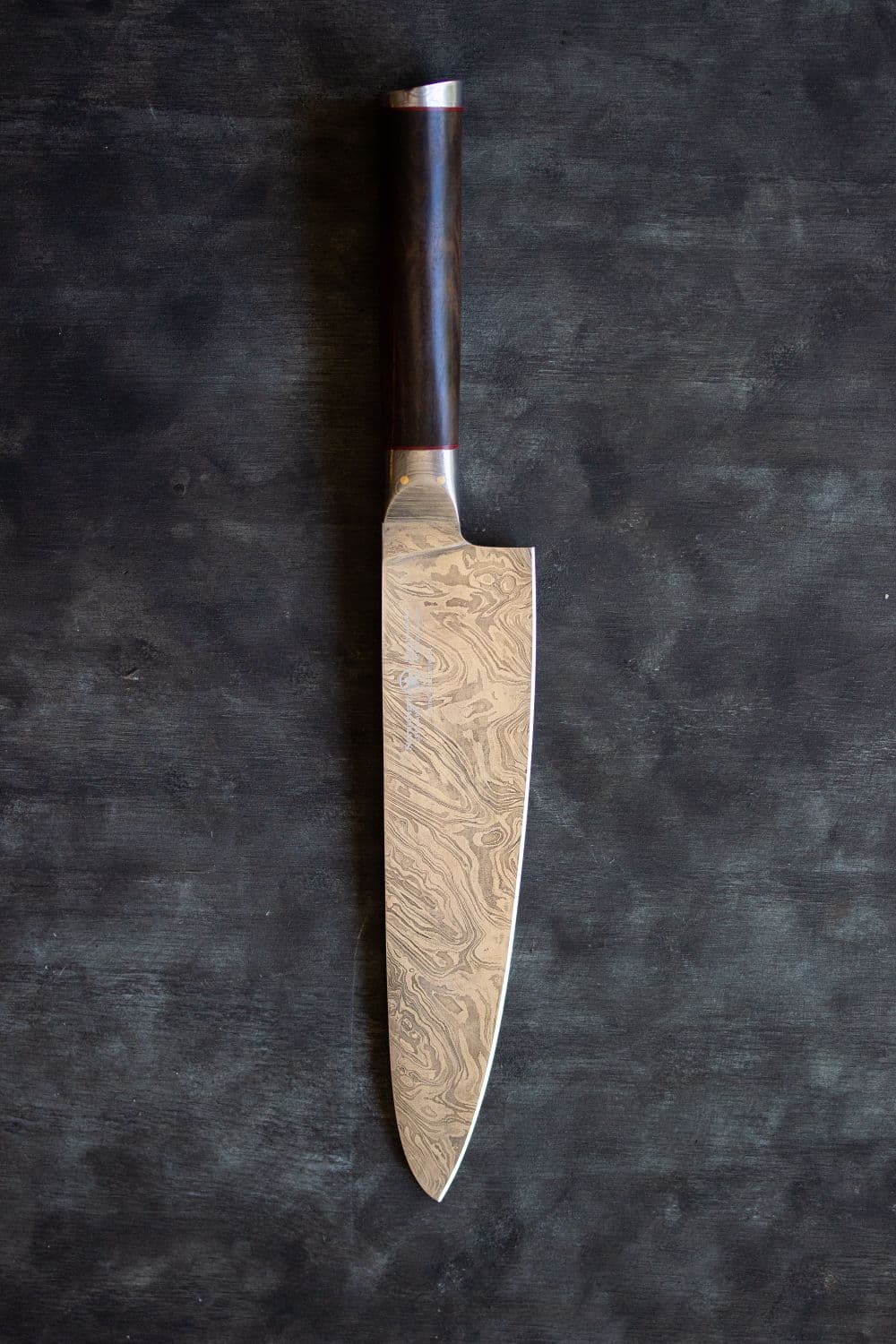
What is Ginsan?
Ginsan (銀三, "silver three", also Gin-san or Ginsanko) is a high-carbon stainless steel from Hitachi — the same maker as the famous white and blue carbon steels. Its trick is chemistry that gives it carbon-like behaviour on the stones and at the edge, while enough chromium keeps it stainless. In other words, it aims to bottle what people love about white steel without the reactivity.
Why sharpeners love it
Most stainless steels are a little gummy or stubborn to sharpen compared with carbon. Ginsan isn't: it sharpens easily and crisply, takes a very keen, clean edge, and responds to the stones the way carbon does — all without a patina or rust to worry about. For anyone who enjoys sharpening but doesn't want reactive steel, that's the dream combination.
Ginsan vs VG10 vs Shirogami
| Ginsan | VG10 | Shirogami | |
|---|---|---|---|
| Type | Stainless | Stainless | Carbon |
| Ease of sharpening | Very easy | Easy | Easiest |
| Keenness | Very keen | Keen | Keenest |
| Edge retention | Good | Slightly more | Good |
| Rust care | Minimal | Minimal | Needs care |
| Availability / price | Less common | Common, value | Common |
In short: Ginsan for the best sharpening feel in a stainless, VG10 for retention and value, Shirogami if you'll embrace carbon.
Care & sharpening
Care is easy stainless care: wash, dry, done — no patina to build, no rush to dry, minimal rust risk. When it needs sharpening, it's a pleasure on any decent whetstones, responding cleanly and quickly. It's one of the most beginner-friendly steels to learn to sharpen on precisely because it behaves so nicely.
Is Ginsan for you?
Yes if
- You want carbon-like sharpening in a stainless
- You value a keen, clean edge
- You don't want rust or patina care
- You're learning to sharpen
Look elsewhere if
- You want maximum edge retention — SG2 or VG10
- You want the cheapest, most available stainless — VG10
- You actively want a reactive carbon blade — Shirogami
- You can't find it — it's less common
The bottom line
Ginsan is the sharpener's stainless: it feels and cuts like white steel but never rusts. If you love how carbon sharpens and hate how it's maintained, this is the steel that gives you the first without the second.
Weighing it against the field? Start with VG10 vs Aogami vs Shirogami, or the low-maintenance SG2.
Comparing steels side by side? Our knife steel table puts all 16 in one sortable chart — hardness, edge retention, toughness, rust resistance and how hard each is to sharpen.
Frequently asked questions
What is Ginsan (Silver 3) steel?
Ginsan (銀三, also written Gin-san, Ginsanko or 'Silver 3') is a Japanese high-carbon stainless steel from Hitachi. It's prized because it behaves much like white carbon steel — easy to sharpen and capable of a very keen edge — while being stainless and rust-resistant. It's often described as the closest thing to carbon-steel performance without the carbon-steel maintenance.
Ginsan vs VG10 — which is better?
Both are excellent Japanese stainless steels. Ginsan sharpens more easily and takes a slightly cleaner, more carbon-like edge, which sharpeners love; VG10 has a touch more edge retention, is more widely available and often cheaper. Choose Ginsan for the best sharpening feel in a stainless, VG10 for edge retention and value.
Is Ginsan stainless or carbon?
Stainless — but a high-carbon stainless that acts like carbon in the ways people care about. You get carbon's ease of sharpening and keen edge, minus the reactivity: it won't rust readily or need a patina. That combination is exactly why it has a devoted following.
Does Ginsan hold an edge well?
Yes — good edge retention, roughly on par with other 60–61 HRC Japanese stainless steels, and a hair behind VG10. Where it stands out isn't outright retention but the balance: keen, easy to bring back on a stone, and rust-resistant. For most home cooks that balance matters more than a small difference in how long the edge lasts.
Ginsan vs Shirogami — what's the difference?
Shirogami (white steel) is reactive carbon; Ginsan is stainless. They sharpen and cut similarly — that's the point of Ginsan — but Shirogami can reach a marginally keener edge and Ginsan needs none of the drying, patina and rust care. If you love how white steel sharpens but hate the maintenance, Ginsan is the stainless answer.
Is Ginsan good for beginners?
Very. It's forgiving to sharpen, takes a great edge, and needs no special rust care, so it's an ideal stainless for someone learning to use a whetstone without the anxiety of a reactive blade. If you want carbon-like sharpening as a beginner but low maintenance, Ginsan is a superb choice.
Choosing a knife by its steel?
Compare the steels and types side by side. Our curated shelf opens soon — join the waitlist to hear first.
The steel guide →