
Double-bevel: mostly fine, two things to check
A double-bevel knife is ground on both sides, so a gyuto, santoku, nakiri or petty works in either hand — most left-handers use them with no thought at all. Two subtleties: many are ground asymmetrically (say 70/30) to favour a right hand's steering and food release, so a symmetric 50/50 grind feels more natural for a lefty; and the handle shape can matter (below). Neither is a barrier — just a preference worth knowing.
Single-bevel: you must buy handed
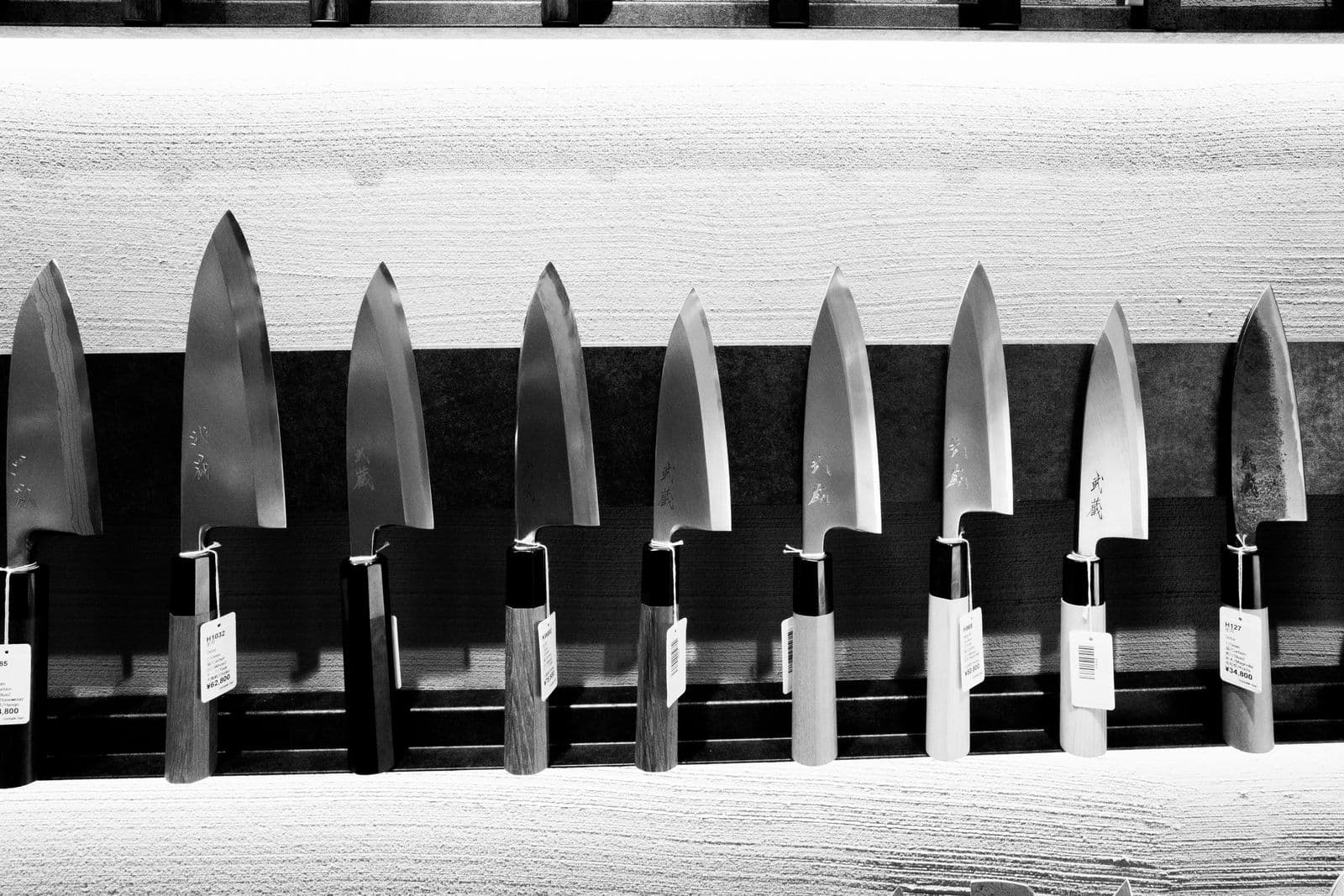
A yanagiba, usuba or deba is ground on one side with a hollowed back, and a standard one is built for right hands. Used left-handed it fights its own geometry. Left-handers need a dedicated left-handed single-bevel — a full mirror of the grind and hollow — which is rarer and usually pricier. Plan for it rather than trying to adapt a right-handed one.
Handles matter too
A wa handle with a D-shaped cross-section is contoured for one hand (usually the right), so it can feel slightly off in the left. Oval and octagonal wa handles, and standard Western (yo) handles, are ambidextrous. An easy rule for lefties: choose an oval or octagonal handle and the question disappears.
What to buy
Everyday (easy)
- Double-bevel gyuto or santoku
- Symmetric 50/50 grind
- Oval or octagonal (or yo) handle
- No compromise at all
Traditional (plan ahead)
- Left-handed yanagiba / usuba / deba
- Buy the dedicated handed version
- Expect fewer options, higher price
- Don't adapt a right-handed one
The bottom line
Left-handers can enjoy almost the whole Japanese knife world: double-bevel knives are yours freely, just pick a symmetric grind and a neutral handle. Only for single-bevel knives do you need to buy specifically left-handed — so plan for that one.
Not sure which type to start with? Take the quiz or read the best Japanese knife for beginners.
Want the parts rather than the words? The knife anatomy guide has a labelled diagram of every part of the blade and handle, in Japanese and English.
Frequently asked questions
Can left-handers use Japanese knives?
Yes. Double-bevel Japanese knives — gyuto, santoku, nakiri, petty and most everyday knives — work in either hand, so left-handers use them without issue. The two things to watch are the grind (some double bevels are asymmetric, ground to favour a right hand) and the handle shape. Single-bevel knives are a different story: they're strongly handed.
Are single-bevel Japanese knives handed?
Very. A yanagiba, usuba or deba is ground on one side and hollowed on the back, and a standard one is made for right-handers. A left-hander needs a dedicated left-handed version, which is rarer and usually more expensive. You can't simply flip a right-handed single bevel — using it left-handed works against its geometry.
What is an asymmetric bevel, and does it matter for lefties?
Many double-bevel Japanese knives aren't a perfect 50/50 — they're ground with more angle on one side (say 70/30) to steer and release food, usually favouring a right hand. A left-hander can still use them, but a symmetric (50/50) or left-biased grind feels more natural. It's a preference, not a barrier, for double-bevel knives.
Do knife handles affect left-handers?
Some do. A D-shaped wa handle is contoured for one hand (usually the right), so it can feel slightly off in the left. Oval and octagonal wa handles, and standard Western (yo) handles, are ambidextrous and comfortable in either hand. If you're left-handed, an oval or octagonal handle sidesteps the issue.
What should a left-hander buy?
For everyday use, a double-bevel gyuto or santoku with a symmetric (50/50) grind and an oval or octagonal handle — no compromise at all. Only for traditional single-bevel knives (yanagiba, usuba, deba) do you need to specifically seek out a left-handed version, and to budget a little more for it.
Are left-handed Japanese knives more expensive?
Double-bevel ones generally aren't — they're the same knives. Left-handed single-bevel knives can cost more and be harder to find, because they're made in smaller numbers and require the whole grind and hollow to be mirrored. Plan ahead if you want a left-handed yanagiba, usuba or deba.
Shopping as a left-hander?
Our curated shelf — double-bevel all-rounders and more — opens soon. Join the waitlist to hear first.
Browse knife types →