
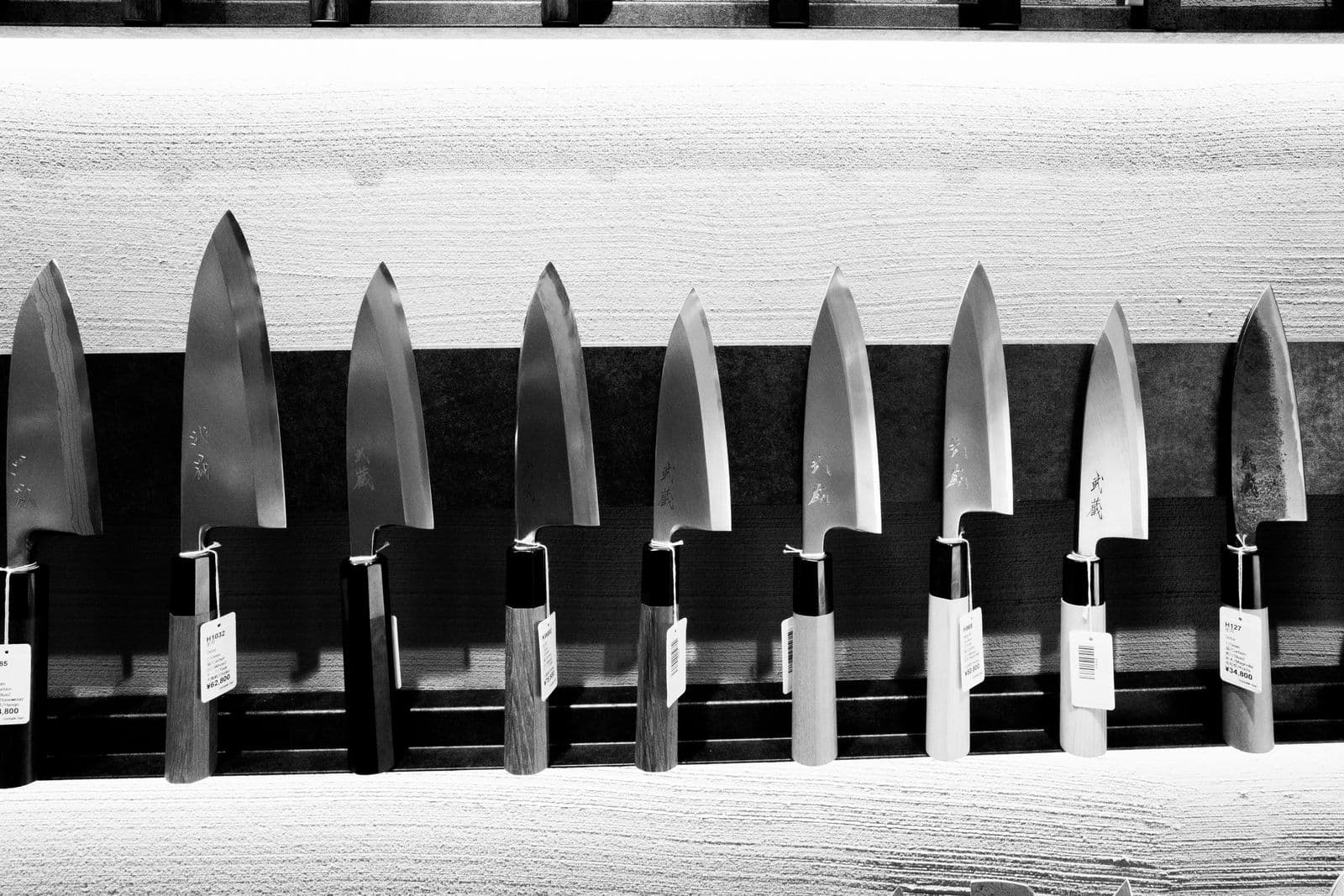
The wa handle
The wa handle (和, "Japanese") is the traditional style — typically a piece of light wood such as magnolia or ho, shaped octagonal, D-section or oval, with no bolster and no rivets. It's friction-fitted onto a hidden tang, which makes it light and, unusually, replaceable: a worn or loose wa handle can be knocked off and a fresh one fitted. Being light, it pushes the knife's balance forward, toward the blade.
The yo handle
The yo handle (洋, "Western") is the style you know from European knives — synthetic (POM) or wood scales riveted onto a full or partial tang, usually with a bolster. It's heavier and feels planted and secure, tolerates rough handling and moisture well, and sits familiar in the hand for anyone coming from Western knives. The trade-off: it's heavier and hard to replace.
Side by side
| Wa 和 | Yo 洋 | |
|---|---|---|
| Material | Wood, no rivets | Synthetic or wood, riveted |
| Weight | Light | Heavier |
| Balance | Blade-forward | Neutral / handle-heavy |
| Attachment | Friction-fit (hidden tang) | Riveted (full/partial tang) |
| Replaceable? | Yes, easily | Not really |
| Durability | Good, can loosen over years | Very robust |
| Feel | Nimble, traditional | Planted, familiar |
Balance & feel
This is the heart of it. A light wa handle shifts the balance point toward the blade, giving that nimble, blade-forward feel many cooks love for precise work. A heavier yo handle moves balance back toward the hand, for a more neutral, anchored feel. Neither cuts better — but they cut differently in the hand, which is why it's worth holding both if you can.
Which should you choose?
Lean wa
- You want a light, agile, blade-forward knife
- You like traditional looks and feel
- You value being able to re-handle it later
- You do a lot of fine, precise cutting
Lean yo
- You want heft and a planted, secure grip
- You're coming from Western knives
- You want maximum robustness and low fuss
- You prefer a bolster and contoured scales
The bottom line
The blade does the cutting; the handle decides how it feels doing it. Wa for light and nimble, yo for heavy and planted — pick the feel you want in your hand, not the one that's "better".
Handle style is one piece of the puzzle — the type and steel matter more for what a knife does. New to all this? Start with the best Japanese knife for beginners.
Want the parts rather than the words? The knife anatomy guide has a labelled diagram of every part of the blade and handle, in Japanese and English.
Frequently asked questions
What is the difference between a wa handle and a yo handle?
A wa handle is the traditional Japanese style: usually wood, often octagonal or D-shaped, light, with no bolster, friction-fitted onto a hidden tang. A yo handle is the Western style: heavier, riveted onto a full or partial tang, often with a bolster and synthetic or wood scales. The wa is lighter and shifts balance toward the blade; the yo is more robust and feels more secure and familiar to Western users.
Is a wa or yo handle better?
Neither — it's preference. A wa handle makes a knife lighter and more blade-forward, which many find nimble and precise; it's also easy to replace if it wears. A yo handle is heavier, sturdier and feels planted and secure, and it's more forgiving of rough handling. Try both if you can; if you can't, choose by whether you want lightness and agility (wa) or heft and durability (yo).
Are wa handles less durable?
They're a little more delicate but very serviceable. Traditional wa handles are often friction-fitted magnolia or ho wood, which can loosen or dry over many years — but that's also why they're easy and cheap to replace or upgrade. A yo handle is riveted and sealed, so it tolerates rough use and moisture better, at the cost of being hard to change.
Can you replace a wa handle?
Yes, and easily — it's one of the wa handle's advantages. Because it's friction-fitted onto a hidden tang, a worn or loose wa handle can be knocked off and a new one fitted, letting you refresh or even upgrade the handle without a new knife. Yo handles are riveted through the tang and are much harder to replace.
Does the handle change the balance of the knife?
Noticeably. A light wooden wa handle shifts the balance point toward the blade, giving a blade-forward, nimble feel favoured for precise cutting. A heavier yo handle moves the balance back toward the hand, giving a more neutral or handle-heavy feel that some find planted and controlled. If balance matters to you, it's worth handling both before deciding.
Which handle is better for large hands or a firm grip?
Many people with larger hands or who like a secure, planted feel prefer a yo handle for its heft and contoured, riveted grip. That said, octagonal and larger wa handles are also very comfortable and give fine control. It comes down to whether you want a light, agile knife or a heavier, more anchored one.
Getting a feel for Japanese knives?
Our curated shelf — wa and yo handles alike — opens soon. Join the waitlist to hear first.
Browse knife types →