
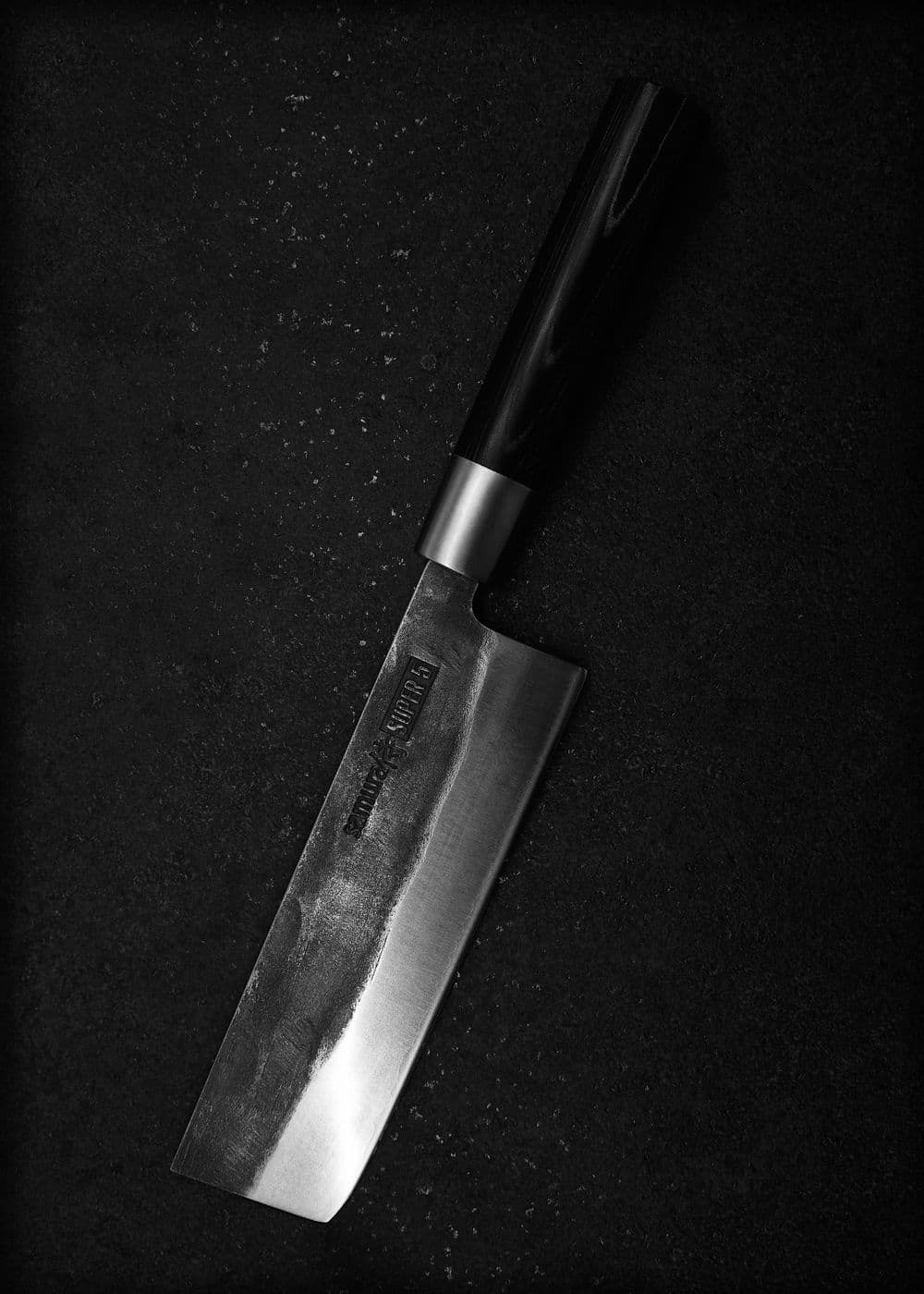
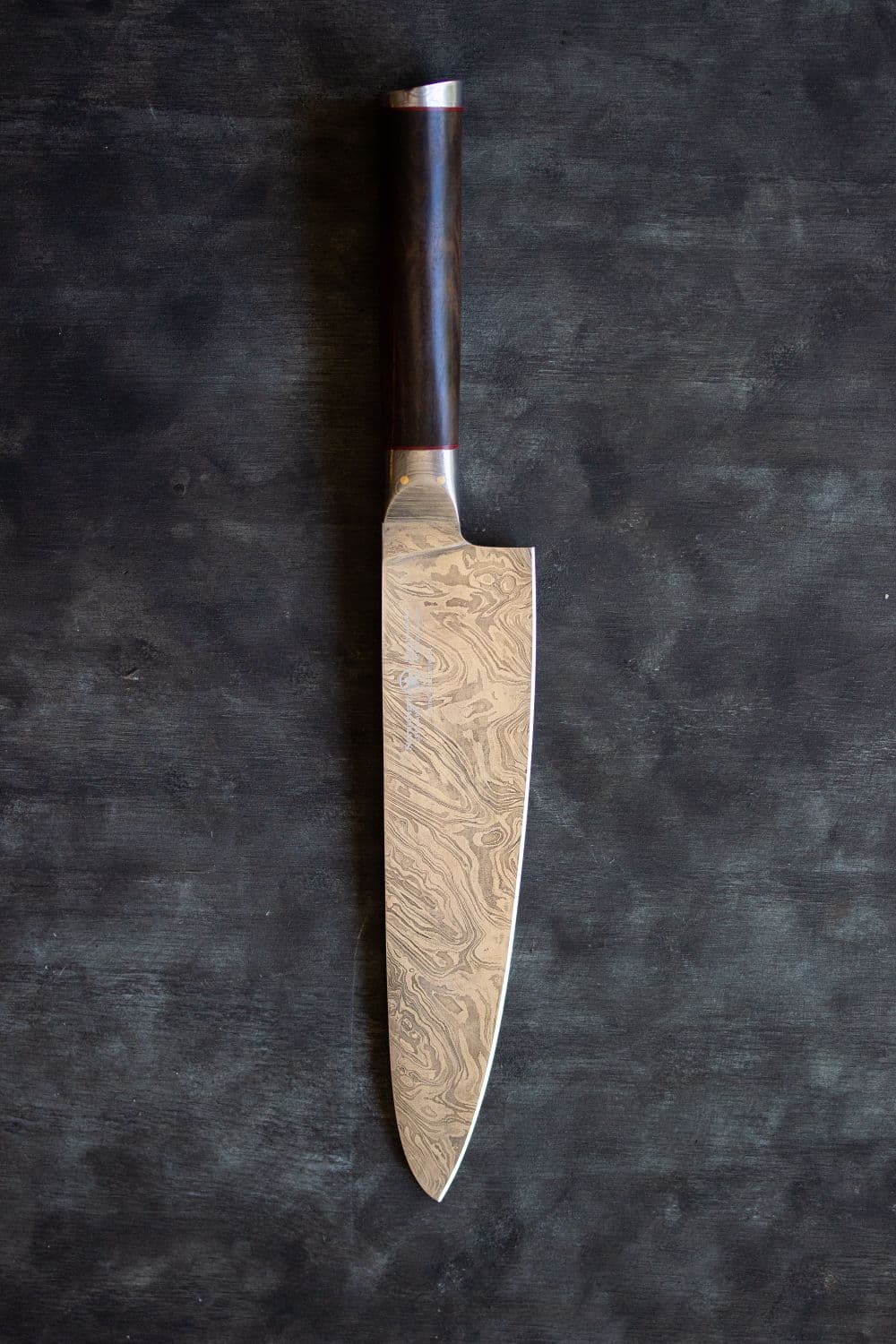
Buy one great knife, not a set
The most common beginner mistake is buying a big block set. Sets look like value, but they spend your money on a stand and eight knives you'll rarely touch — and the two you do use are usually mediocre to keep the price down. Professionals do about 90% of their cutting with a single chef's knife. You'll be the same.
Put the whole budget into one excellent all-rounder. Add a small petty knife later if you want, and a bread knife for loaves — but the main knife is where quality actually changes how cooking feels.
Step 1 — pick the shape: gyuto or santoku
Your first knife should be an all-rounder, and in Japanese knives that means one of two shapes. A gyuto is the Japanese chef's knife: longer, pointed, with a curved belly for rock-chopping. A santoku is shorter and flatter with a rounded tip, built for a straight up-and-down chop and very easy to control.
- Choose a gyuto if you want the most versatile single knife, cook a fair amount of meat and fish, or already rock-chop with a Western knife.
- Choose a santoku if you cook mostly vegetables, have a smaller board or hands, or want the friendliest knife to learn on.
Genuinely torn? We break it down in full in Gyuto vs Santoku: which should you choose? — but you can't go badly wrong either way.
Step 2 — pick the size
For a gyuto, 210 mm (about 8 inches) is the all-round sweet spot for most kitchens. Choose 180 mm if you have smaller hands or a compact board, or 240 mm only if you do a lot of prep and have the space. For a santoku, 165–180 mm covers nearly everyone. The one thing to avoid is going too small for your main knife — a stubby blade makes big vegetables and proteins clumsy.
Step 3 — pick the steel: start stainless
This is where beginners overthink things. The internet romanticises carbon steel (Aogami, Shirogami) for its keen edge — and it's wonderful — but carbon reacts with food and water, so it patinas and can rust if you don't dry it every single time. For a first knife, start with stainless such as VG10: it takes a lovely sharp edge, holds it well, and forgives the odd wet blade while you build good habits.
You can always add a carbon knife later, once caring for a blade feels like a pleasure rather than a chore. If you want the full picture, see VG10 vs Aogami vs Shirogami: which steel?
You don't need to learn single-bevel
Both the gyuto and santoku are double-bevel (sharpened on both sides), so they cut and sharpen just like a Western knife. Traditional single-bevel knives — yanagiba, deba, usuba — are specialist tools that take real practice to use and sharpen. Beautiful, but not a first knife.
What a good first knife costs
A genuinely good stainless Japanese knife starts around $70, and the sweet spot for a first buy is roughly $100–150. That range gets you quality steel, a clean grind and a comfortable handle without paying for a hand-forged finish you don't need yet. Spending more mostly buys prettier steel and finishing, not a knife that cuts twice as well — and under about $30, you're usually buying something that won't hold an edge or feel like the real thing.
What to skip (for now)
Good signs green lights
- A single 210 mm gyuto or 170 mm santoku
- Stainless or stainless-clad steel
- Double bevel, comfortable handle
- A clear return policy and real reviews
Skip for now red flags
- Big block sets and "14-piece" deals
- Single-bevel knives as a first buy
- Ultra-cheap blades under ~$30
- Anything sold on hardness numbers alone
Look after it — the whole routine
A Japanese knife is thinner and harder than a typical Western knife, which is why it's sharper — and why a few simple habits matter:
- Hand-wash and dry it right after use. Never the dishwasher.
- Cut on wood or soft plastic. Glass, stone, ceramic and steel boards wreck the edge.
- No bones, frozen food or hard squash with a thin gyuto or santoku — that's a job for a heavier knife.
- Don't scrape food off the board with the sharp edge; turn the knife and use the spine.
- Skip the honing steel. Hard Japanese edges are refreshed on a whetstone, not a rod or a pull-through sharpener. When it starts to dull, that's the skill to learn next.
The bottom line
One knife, done right: a 210 mm gyuto or 170 mm santoku, in stainless, around $100–150. Keep it dry and keep it sharp, and it'll be the knife you reach for every day for years.
A first Japanese knife shouldn't be a gamble. Get the shape that fits how you cook, the size that fits your hands, and a steel that forgives a beginner — and you'll have bought once, well.
Frequently asked questions
What is the best first Japanese knife?
For most people, one all-round knife in stainless steel: either a 210 mm gyuto (the Japanese chef's knife) or a 165–180 mm santoku. Both are double-bevel, so they handle like a Western knife — no special technique needed. A well-made stainless gyuto around $80–150 will cover almost everything you cook and will still feel great years later.
Gyuto or santoku for a beginner?
Both are excellent first knives. Choose a gyuto if you already rock-chop or came from a Western chef's knife and want maximum versatility, including proteins and larger vegetables. Choose a santoku if you cook mostly vegetables, have a smaller kitchen or board, and prefer a simple up-and-down chop — it's a touch easier to control. Neither is a wrong choice.
What size knife should a beginner buy?
A 210 mm (about 8-inch) gyuto is the all-round sweet spot; drop to 180 mm for smaller hands or boards. For a santoku, 165–180 mm suits nearly everyone. Avoid going too short for your main knife — a blade that's too small makes big vegetables awkward.
Should a beginner get carbon or stainless steel?
Start with stainless, such as VG10. Carbon steels take a slightly keener edge but react with food and water, so they patina and can rust if you don't dry them every time. Stainless gives you nearly all the performance with none of the worry while you build good habits. You can always add a carbon knife later once you enjoy the ritual of care.
How much should I spend on my first Japanese knife?
You don't need to spend a fortune. A genuinely good stainless Japanese knife starts around $70 and the sweet spot for a first buy is roughly $100–150 — enough for quality steel and a comfortable handle without paying for a collector's finish. Be wary of knives under about $30: they usually won't hold an edge or feel like the real thing.
Can I put a Japanese knife in the dishwasher?
No. The heat, harsh detergent and knocking against other items will dull, chip and corrode the edge, and can crack a wooden handle. Always hand-wash a Japanese knife and dry it right away. It takes ten seconds and it's the single biggest thing you can do to keep it sharp.
Ready to buy once, well?
Our tight, curated shelf of beginner-friendly gyuto and santoku opens soon — join the waitlist.
Explore the shelf →