
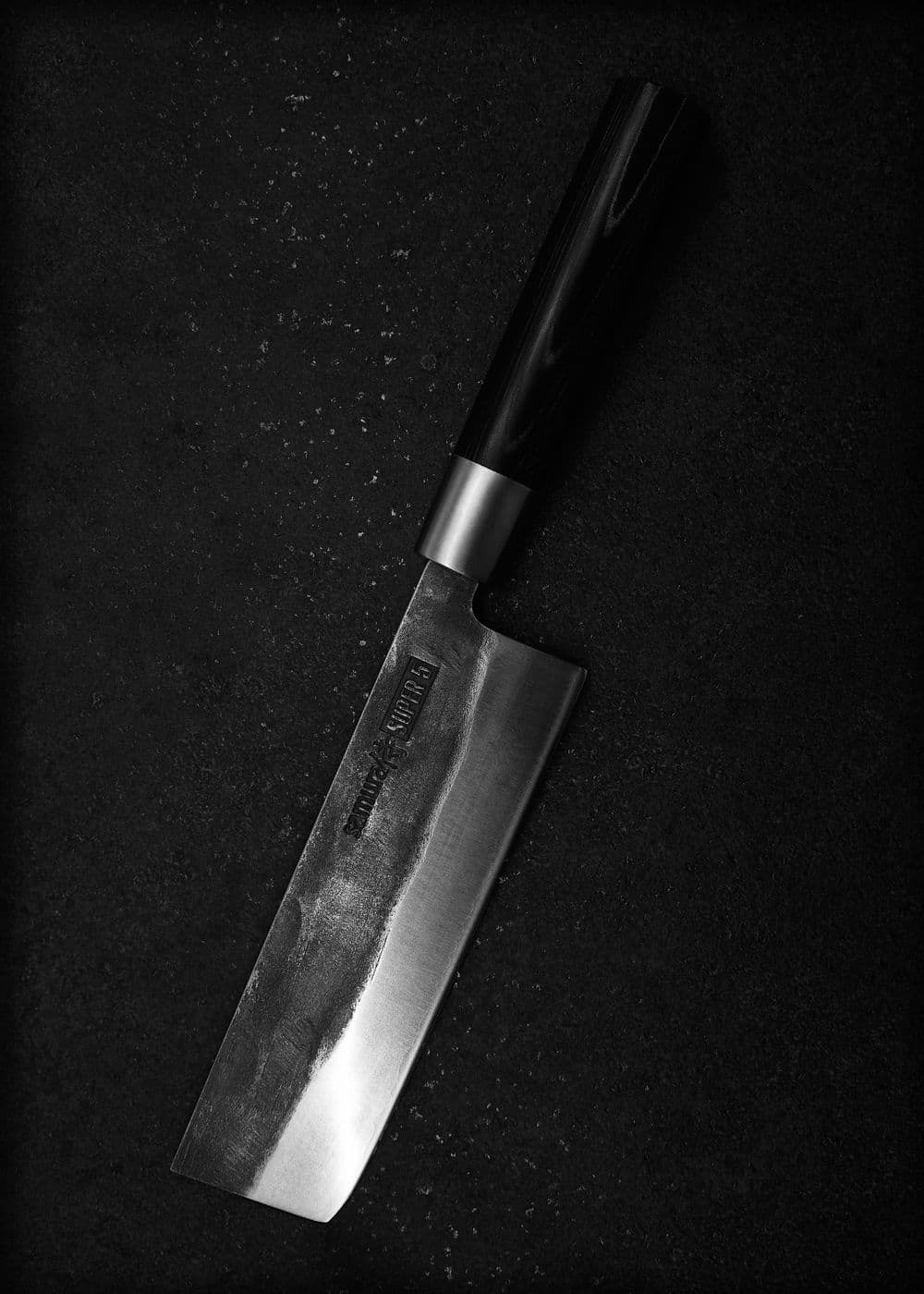
Length: shorter wins
The single biggest factor is blade length. A shorter blade — around 150–180 mm for an all-rounder — is far easier to steer confidently in a smaller hand, while a long 240 mm knife needs more reach and a bigger board and can feel unwieldy. Favour control over reach; you can always size up later once a knife feels natural. See our size guide for the full picture.
Weight & balance
A lighter knife is less tiring and easier to control — and Japanese knives are generally light to begin with. Balance matters just as much: a light wa handle shifts the balance toward the blade, giving a nimble, blade-forward feel that suits precise work in a smaller hand. Heavy, handle-heavy knives feel like more work.
The handle
A slimmer handle is easier to grip securely, while very thick Western handles can feel awkward in a small hand. Octagonal and oval wa handles are comfortable and easy to control. If you possibly can, hold a knife before buying — comfort is personal, and a handle that fits your hand transforms how a knife feels.
Best types for small hands
Great fits
Approach with care
- 240 mm+ blades — reach and board demands
- Heavy Western knives — tiring
- Thick, chunky handles — hard to grip
- Long single-bevel knives — length + skill
The bottom line
Shorter, lighter, slimmer, blade-forward. A 165–180 mm santoku or a 180 mm gyuto with a slim wa handle fits most small hands beautifully — control first, reach later. Hold one if you can; the right fit is unmistakable.
Still narrowing it down? Take the quiz or read the best Japanese knife for beginners.
Frequently asked questions
What size knife is best for small hands?
A shorter, lighter blade — around 150–180 mm for an all-rounder. A 165–180 mm santoku or a 180 mm gyuto is easy to control, and a 120–150 mm petty is a superb nimble second knife. The goal is a blade you can steer confidently without it feeling like too much knife, so favour control over reach.
Are Japanese knives good for small hands?
Very. Japanese knives tend to be lighter and thinner than heavy Western knives, and light wa handles shift the balance toward the blade for a nimble feel — all of which suits smaller hands. Choose a shorter length, a slim handle and a light overall weight, and Japanese knives are among the most comfortable options.
What knife type is best for small hands?
A santoku is a natural fit: short, light and easy to control. A smaller gyuto (180 mm) works if you want a pointed, curved all-rounder, and a petty is excellent for detail and small tasks. A nakiri suits lots of vegetable work. Avoid long, heavy blades and thick handles until you know they feel comfortable.
Does the handle matter for small hands?
A lot. A slimmer handle is easier to grip securely, and a light wa handle keeps the knife feeling nimble and blade-forward. Very thick or heavy Western handles can feel unwieldy in a small hand. Octagonal and oval wa handles are comfortable and easy to control; try to hold a knife before buying if you can.
Is a lighter knife better for small hands?
Usually, yes. A lighter knife is less tiring and easier to control for smaller hands, and Japanese knives are generally light to begin with. Balance matters too: a blade-forward feel from a light wa handle makes a knife feel agile and precise rather than heavy in the hand.
Should I avoid big chef's knives if I have small hands?
Not entirely — but start smaller. A 240 mm blade needs more reach and a bigger board and can feel unwieldy in a small hand, so a 180–210 mm all-rounder is a safer, more comfortable choice. If you later find you want more length, you can size up once you're confident.
Finding a knife that fits your hand?
That's our whole philosophy. Find your match in four questions — and join the waitlist for our curated shelf.
Find your knife →