
Millimetres & inches
Japanese knives are measured in millimetres because that's how they're made. To picture the length in inches, divide by 25.4. The everyday reference point: a 210 mm gyuto is the metric equivalent of the classic 8-inch chef's knife. Sizes cluster on round numbers — 150, 165, 180, 210, 240, 270 mm.
Put a number in and it will tell you both the conversion and what that length actually is — which is the part a bare conversion leaves out.
210 mm is 8.27 in — Gyuto (compact) / bunka. A 210 mm gyuto is the most popular chef's knife size in Japan.
Exactly 1 inch = 25.4 mm, so a "7-inch" knife is 177.8 mm — which is why 180 mm santoku are sold as 7-inch. Listings round in both directions, so treat any inch figure on a Japanese knife as approximate and trust the millimetres.
Typical size by knife type
| Type | Common length | ≈ inches |
|---|---|---|
| Petty | 120–150 mm | 4¾–6 in |
| Santoku | 165–180 mm | 6½–7 in |
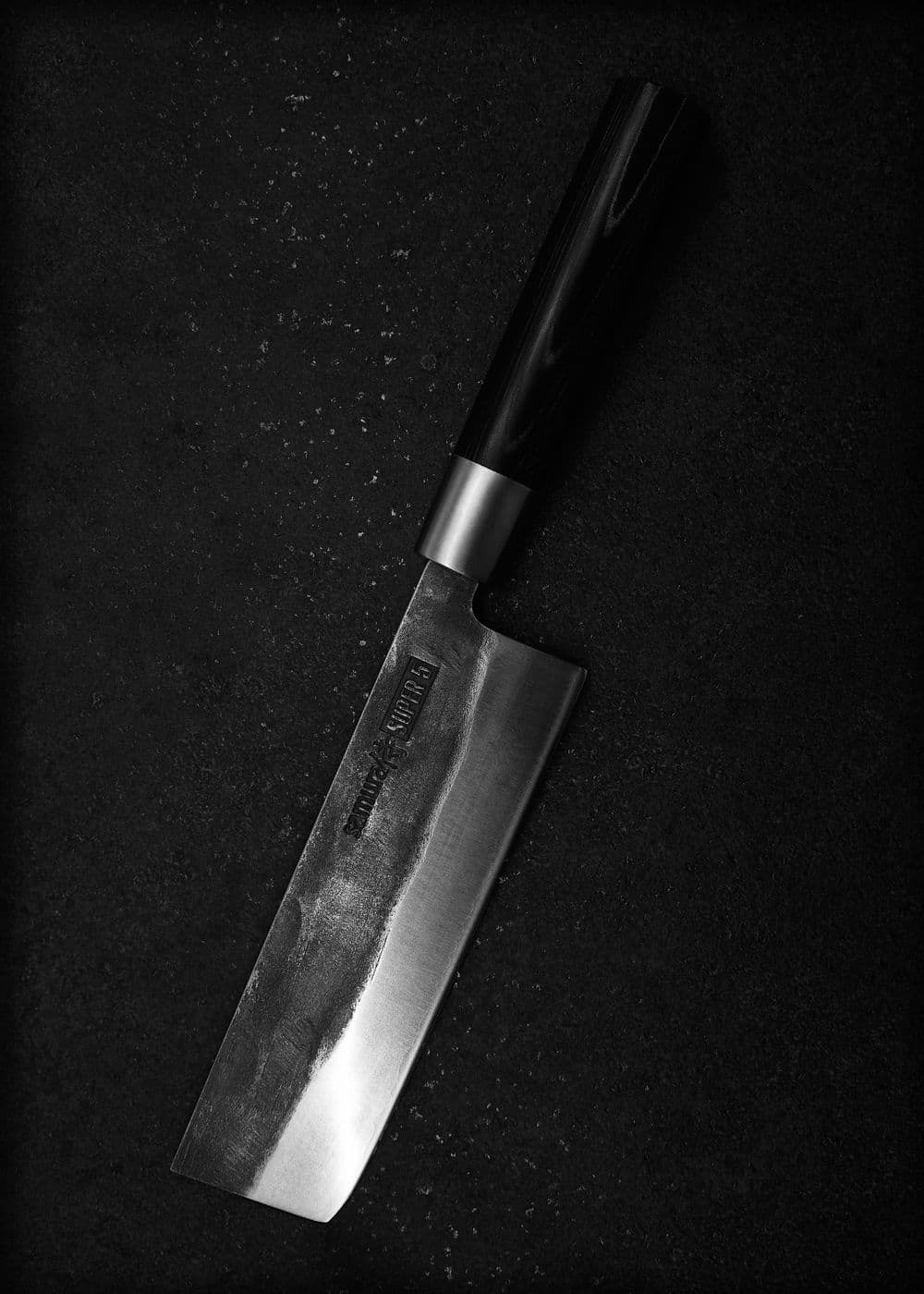
| Nakiri / Bunka | 165–180 mm | 6½–7 in |
| Gyuto | 210 mm (180–270) | 8¼ in |
| Sujihiki | 270 mm (240–300) | 10½ in |
| Yanagiba | 270 mm (240–330) | 10½ in |
| Bread | 240 mm (200–270) | 9½ in |
Not sure which type first? Compare them in the gyuto vs santoku guide or with our side-by-side tool.
How to choose your length
Four things decide it. A bigger board and larger hands handle a longer blade comfortably; a small board or hands favour a shorter one. Storage matters too — a 270 mm blade needs room on a strip or in a drawer. And confidence: a longer knife is more efficient but feels like more knife, so if you're newer, a 210 mm gyuto or a 180 mm santoku is easier to master.
Match the knife to the board
Your blade shouldn't overhang the board in normal use. A 240 mm knife on a small board feels cramped and awkward, and encourages bad technique. Size the knife to the board you actually have — or upgrade the board first — rather than forcing a mismatch.
The bottom line
For most people, a 210 mm gyuto or a 165–180 mm santoku is the right first size. Go bigger only if your board and hands want it, smaller if control or space is the priority. The best length is the one that feels natural on your board.
Once you've picked a size, choose the shape in the best Japanese knife for beginners, or take the quiz.
Frequently asked questions
What size Japanese knife should I buy?
For an all-round chef's knife (gyuto), 210 mm (about 8¼ inches) is the versatile default for most home cooks. Drop to 180 mm for smaller kitchens, boards or hands; step up to 240 mm if you have the space and cut a lot of large produce. The right size is the biggest blade you can use confidently on your board without feeling unwieldy.
Why are Japanese knives measured in millimetres?
Because they're made in Japan, which uses the metric system, so blade length is given in millimetres. A quick conversion: 25.4 mm is one inch, so a 210 mm gyuto is about 8¼ inches and a 240 mm is about 9½ inches. Sizes cluster around round metric numbers (150, 180, 210, 240, 270 mm).
Is a bigger knife better?
Not necessarily. A longer blade gives more reach and slices large items in fewer strokes, but it needs a bigger board and more confidence, and it's harder to store. A shorter blade is easier to control and store but less efficient on big tasks. Match the length to your board, your hands and your comfort — not to a 'bigger is better' idea.
What size gyuto for a beginner?
210 mm is the classic first gyuto: long enough to be efficient, short enough to control. If your kitchen or board is small, or you find 210 mm intimidating, a 180 mm gyuto or a 165–180 mm santoku is an easier, very capable starting point.
Does board size affect knife length?
Very much. Your knife shouldn't overhang the board in normal use, so a bigger blade needs a bigger board. If your board is small, a 240 mm knife will feel cramped and awkward — size the knife to the board (or upgrade the board) rather than forcing a mismatch.
How do I convert mm to inches for knives?
Divide millimetres by 25.4. Common lengths: 150 mm ≈ 6 in, 165 mm ≈ 6½ in, 180 mm ≈ 7 in, 210 mm ≈ 8¼ in, 240 mm ≈ 9½ in, 270 mm ≈ 10½ in. You'll mostly see the metric figure, so it's worth remembering that 210 mm is the everyday 8-inch-equivalent.
Found your size?
Compare the types side by side, or answer four questions. Our curated shelf opens soon — join the waitlist.
Find your knife →