
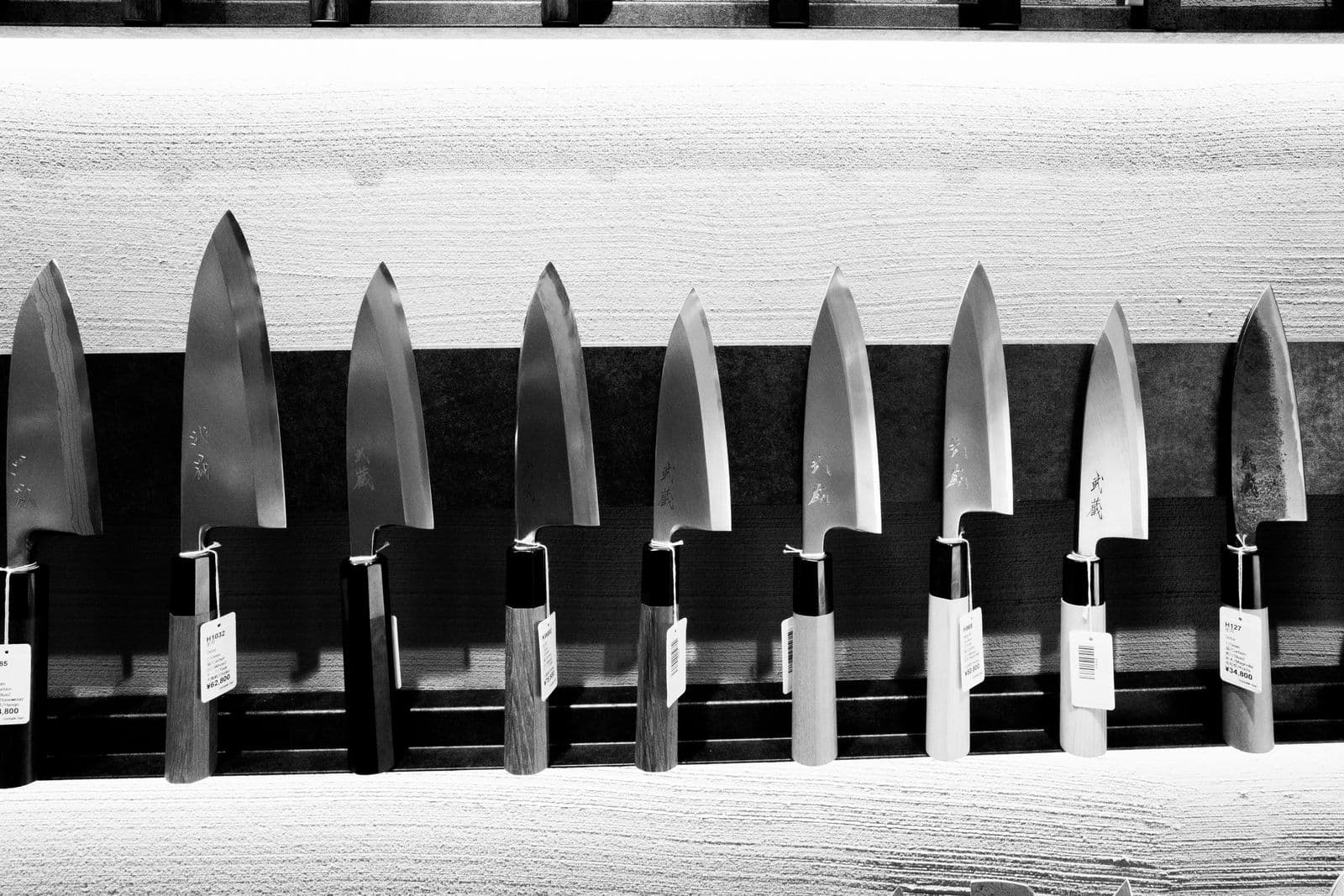
What the money actually buys
Three concrete things. First, harder steel (around 60–63 HRC vs the low-to-mid 50s of a typical Western knife) — it takes a keener edge and holds it far longer. Second, a thinner, more precise grind: less wedging, cleaner cuts, real control. Third, craft and finish — in centres like Sakai, forging and sharpening are done by separate specialists, and it shows.
Put together, that's a knife that feels genuinely different in the hand — sharper out of the box and sharper for longer.
The honest catch
A Japanese knife asks something back. Care: hand-wash and dry, sharpen on a whetstone, and some carbon steels react and patina. Delicacy: a hard, thin edge can chip on bones, frozen food or prying — it's a precision tool, not a cleaver. Price: more up front. If any of those is a dealbreaker, be honest with yourself before buying.
None of this is hidden or unusual — it's simply the flip side of a harder, thinner, sharper blade. Millions of home cooks live with it happily; some would rather not, and that's a fair choice.
Japanese vs German, in one line
Japanese knives are sharper, thinner and more precise but more delicate and higher-maintenance; German knives are tougher, heavier and more forgiving but never quite as keen. Neither is "better" — they suit different cooks. If that's your real question, read the full Japanese vs German comparison.
The cost over time
A genuinely good entry Japanese knife runs around $80–150 — enough for quality steel and a proper grind. Spending more buys nicer steel, finish and handwork, not necessarily a sharper edge. Crucially, a Japanese knife is maintained, not replaced: sharpen it and it stays excellent for decades, which makes the up-front price look very different against a drawer of cheap knives you bin every couple of years. One good knife beats three mediocre ones.
Who it's worth it for
Worth it if
- You cook regularly and value a keen edge
- You'll hand-wash and learn to sharpen
- You want precision and control
- You'd rather own one great knife than many cheap ones
Maybe skip if
- You want a dishwasher-safe, no-maintenance knife
- You cut bones, frozen food or use it as a pry bar
- You'll never sharpen and don't want to
- Budget is tight and one good knife isn't possible yet
The bottom line
A Japanese knife is worth it if you meet it halfway. Give it a hand-wash and a whetstone, and it repays you with a sharpness and precision a cheaper knife never reaches — for decades. Refuse the care, and you're paying for performance you won't use.
Decided you're in? Pick the right first one in the best Japanese knife for beginners.
Frequently asked questions
Are Japanese knives worth the money?
For most people who cook regularly and are willing to hand-wash and sharpen, yes. The money buys harder steel that gets sharper and holds its edge longer, a thinner and more precise grind, and better fit and finish. If you want a cheap knife you can throw in the dishwasher and never sharpen, they're not worth it — a tough German or budget knife suits you better.
Why are Japanese knives so expensive?
You're paying for harder, higher-quality steel, a thinner and more carefully finished grind, and often a lot of skilled handwork — in traditional centres like Sakai, forging and sharpening are done by separate specialists. That craft and precision cost more than a machine-made stamped blade, but a good Japanese knife also lasts decades if you look after it.
What's the catch with Japanese knives?
Three things. They need more care — hand-wash and dry, sharpen on a whetstone, and some carbon steels react and patina. They're more delicate — a hard, thin edge can chip on bones, frozen food or hard prying, so they're not for heavy tasks. And they cost more up front. If those trade-offs are fine for you, the payoff is a far sharper, more precise knife.
Are Japanese knives better than German knives?
Not universally — they're different tools. Japanese knives are harder, sharper, thinner and more precise but more delicate and higher-maintenance. German knives are softer, tougher, heavier and more forgiving, and take abuse better. Precision cooks tend to prefer Japanese; people who want one rugged do-everything knife often prefer German. See our full comparison for details.
How much should a good Japanese knife cost?
A genuinely good entry Japanese knife typically runs from around $80–150, and that's enough to get quality steel and a proper grind. Spending more buys nicer steel, finish and handwork, not necessarily a sharper edge. Below about $60 you're often paying for the look rather than the performance, so it's better to buy one good knife than several cheap ones.
Is a Japanese knife worth it for a beginner?
Yes, if you're ready to hand-wash and learn to sharpen — a single good stainless gyuto or santoku is a superb first knife that will outlast a drawer of cheap ones. If you're not there yet, start with an easy-care stainless and one whetstone. Our beginners' guide walks through the no-regret first purchase.
Think a Japanese knife is for you?
Find your match in four questions. Our curated shelf opens soon — join the waitlist to hear first.
Find your knife →