
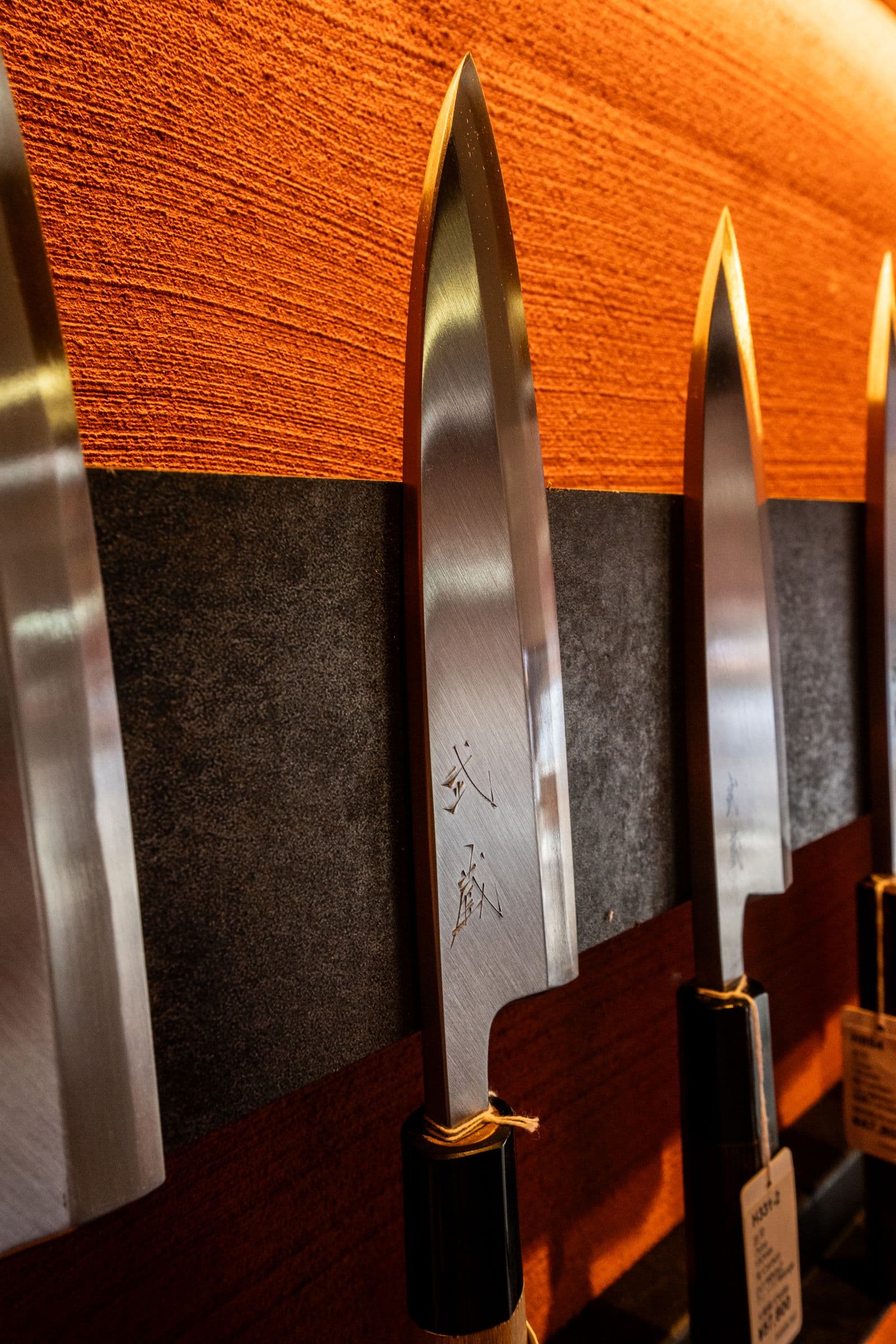
What you need
Two things do most of the work: the fish and the edge. Use sashimi-grade fish, kept cold and patted dry, trimmed into a rectangular block (a saku). And use a very sharp long slicer — a yanagiba is the traditional tool, with a sujihiki the more forgiving alternative. If your knife isn't scary-sharp, sharpen it first — this is the one dish where the edge shows in every slice.
Slicing, step by step
The whole technique is one motion: heel to tip, one long pull toward you, no pressure, no sawing.
Start with the right fish and knife
Use sashimi-grade fish, cold and patted dry, trimmed into a rectangular block (a saku). Use a very sharp knife — ideally a yanagiba, or a sujihiki. A keen edge is non-negotiable: sashimi is about a clean cut, and a dull blade tears the flesh.
Set up your cut
Place the block with the thicker side away from you. Angle the knife slightly and position the heel of the blade at the far top edge of the fish, ready to draw the whole length of the blade through in one motion.
Pull the full blade through (hikizukuri)
Draw the knife toward you in one long, smooth pull, using the entire length of the blade from heel to tip, with almost no downward pressure. Let the sharp edge do the work — do not saw back and forth, which roughens the surface.
Finish and release the slice
Complete the pull so the slice comes off cleanly at the tip, then move it aside with the blade. Aim for an even thickness — around 6–8 mm for most fish, thinner for firm species. A clean single pull leaves a glossy, light-catching face.
Wipe and repeat
Wipe the blade with a clean, damp cloth between slices to keep the cut clean, and re-position the block each time so every slice is cut fresh with one pull. Keep the fish cold as you work.
Why one pull matters
A single clean pull slices cleanly through the flesh, leaving smooth, undamaged cell walls and a glossy face that catches the light. Sawing back and forth tears those fibres, giving a dull, ragged, stringy surface — and it even affects how the fish tastes and feels. This is exactly why the long yanagiba exists: enough blade to finish the slice before you run out of edge.
The bottom line
Sharp knife, cold fish, one long pull. Master that single motion and your sashimi goes from ragged to restaurant — because the cut face is the dish.
New to the knife for the job? Read the yanagiba guide, or the easier sujihiki. Slicing the fish is also step one of making sushi at home — where the rice does the other half of the work.
Frequently asked questions
What knife do you use to slice sashimi?
Traditionally a yanagiba — a long, single-bevel Japanese slicer made for cutting raw fish in one clean pull. A double-bevel sujihiki is a more forgiving alternative that also slices sashimi very well. Whatever you use, it must be very sharp; a dull knife tears the flesh and ruins the cut.
How do you slice sashimi so it's not stringy?
Use a very sharp knife and cut in a single, smooth pull along the full length of the blade — the hikizukuri technique — rather than sawing. Sawing tears the flesh and leaves a rough, stringy surface; one clean pull leaves a smooth, glossy face. Keeping the fish cold and firm also helps.
How thick should sashimi be?
Around 6–8 mm is a good general thickness, cut slightly thinner for firm fish and a touch thicker for soft, fatty fish. The exact thickness is a matter of the fish and the style, but even, consistent slices from a single pull matter more than any precise number.
Can I slice sashimi with a normal chef's knife?
You can if it's very sharp, but it's harder to get a clean single-pull cut with a shorter, curved gyuto than with a long, straight yanagiba or sujihiki. The length of a dedicated slicer lets you finish the slice in one stroke, which is the key to a clean face. A sharp gyuto will do in a pinch.
Slicing your own sashimi?
Explore the knives built for the job. Our curated shelf opens soon — join the waitlist.
The yanagiba guide →