
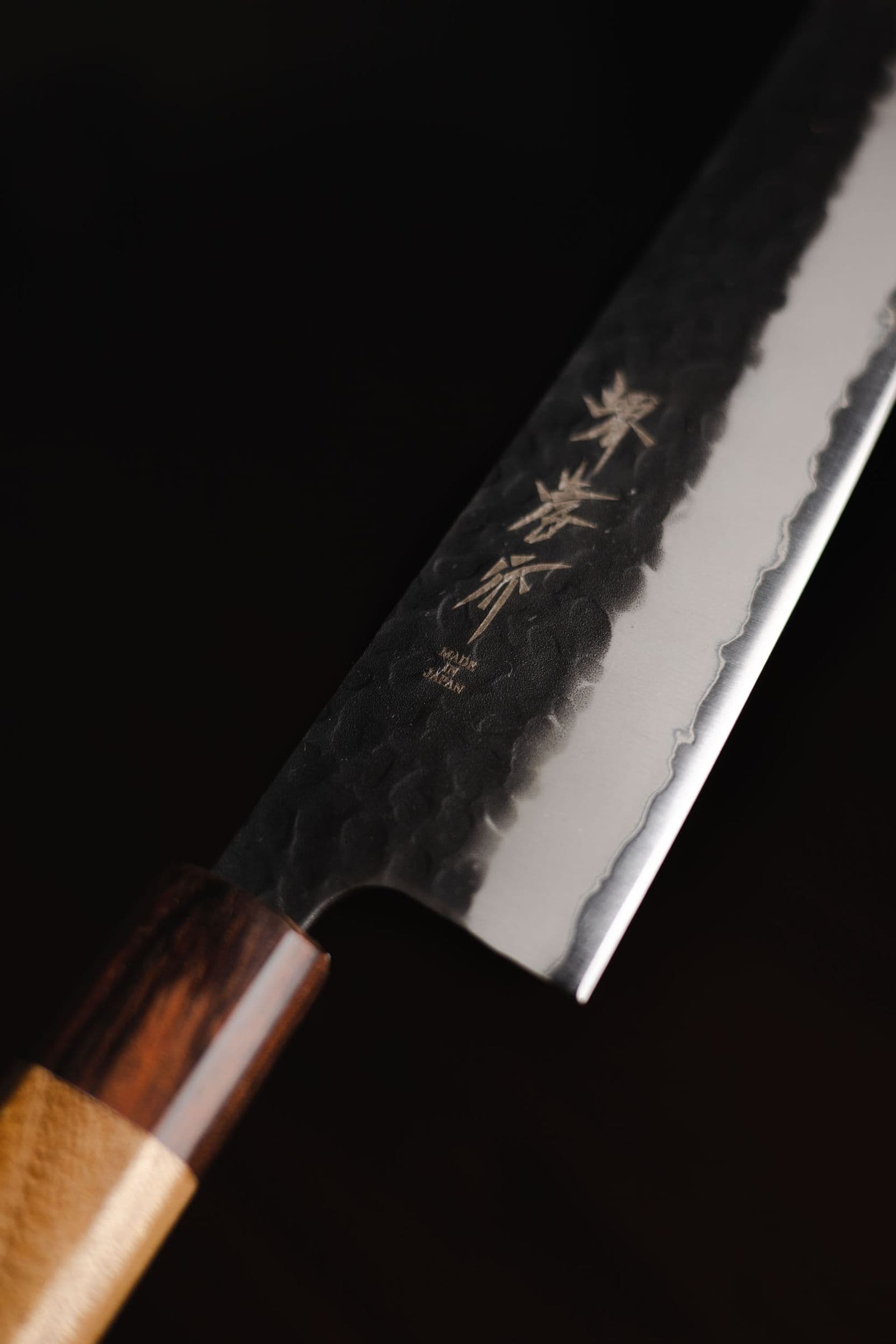
Why the dishwasher ruins knives
Three separate kinds of harm, all in one cycle. Corrosion & dulling: dishwasher detergent is harsh and abrasive, and combined with prolonged heat and moisture it stains steel and takes the fine edge off. Impacts: the blade knocks against racks, cutlery and dishes as the water blasts around — and a thin, hard Japanese edge chips easily. Handle damage: heat and long soaking dry out and crack wooden handles, and loosen the fit over time.
"But mine's stainless…"
Stainless still means no. Stainless is rust-resistant, not immune — dishwasher detergent can stain and pit it over repeated cycles. And the worst damage, a chipped edge and a ruined handle, happens no matter what steel it is. There is no Japanese knife that belongs in a dishwasher.
How to wash a knife properly
It genuinely takes seconds. Rinse with warm water and a little mild dish soap on a soft sponge, wiping along the blade in the direction of the edge (not across it, and away from your fingers). Then dry it immediately with a towel — don't leave it in the sink or standing on a rack. Carbon-steel knives must be dried at once, or they'll spot with rust.
Then store it right
Once it's clean and dry, keep the edge protected: a blade guard or saya, a magnetic strip, or a knife block. What you want to avoid is the knife rattling loose in a drawer against other metal — the second most common way home cooks chip a fine edge, after the dishwasher.
The bottom line
The dishwasher is the fastest way to wreck a good knife: it dulls the edge, stains the steel, chips the blade and cracks the handle. Twenty seconds at the sink saves all of it.
Want the full routine, patina and all? See how to care for a carbon-steel knife.
Frequently asked questions
Are Japanese knives dishwasher safe?
No. Never put a Japanese knife in the dishwasher — not even a stainless one. The harsh detergent and heat corrode and dull the blade, the knife knocks against racks and other items and chips its thin, hard edge, and the moisture and heat crack and loosen the handle. Hand-wash and dry it instead; it takes about twenty seconds.
What about stainless Japanese knives — can they go in?
Still no. 'Stainless' means rust-resistant, not indestructible. Dishwasher detergent is abrasive and corrosive enough to stain and pit even stainless steel over time, and the real damage — a chipped edge from banging around, and a cracked or loosened handle — happens regardless of the steel. Hand-wash every Japanese knife.
Why does the dishwasher damage knives?
Three ways. Heat and harsh detergent corrode and dull the edge and can stain the steel. Impacts: the blade bangs against racks, cutlery and dishes, chipping a thin hard Japanese edge. And handles — especially wood — dry out, crack and loosen from the heat and prolonged moisture. It's a lot of harm for a wash you could do by hand in seconds.
How should I wash a Japanese knife?
By hand, right after use. Wipe or rinse with warm water and a little mild dish soap on a soft sponge, going with the edge, then dry it immediately with a towel — don't leave it in the sink or on the drying rack. Carbon-steel knives especially must be dried at once. Then store it somewhere the edge is protected.
I put my knife in the dishwasher once — is it ruined?
Probably not ruined from one cycle, but check for a dulled or chipped edge and any handle looseness. Sharpen it on a whetstone if the edge is off, dry it well, and don't do it again. Repeated dishwasher cycles are what cause lasting corrosion, chipping and handle failure.
Are any kitchen knives dishwasher safe?
Cheap, tough stainless knives survive the dishwasher better than fine ones, which is why some are labelled dishwasher-safe — but even they dull faster and last less well than if hand-washed. For any good knife, and every Japanese knife, hand-washing is the answer.
Looking after a Japanese knife?
Read the care guides, or see the knife types. Our curated shelf opens soon — join the waitlist.
The care guide →