
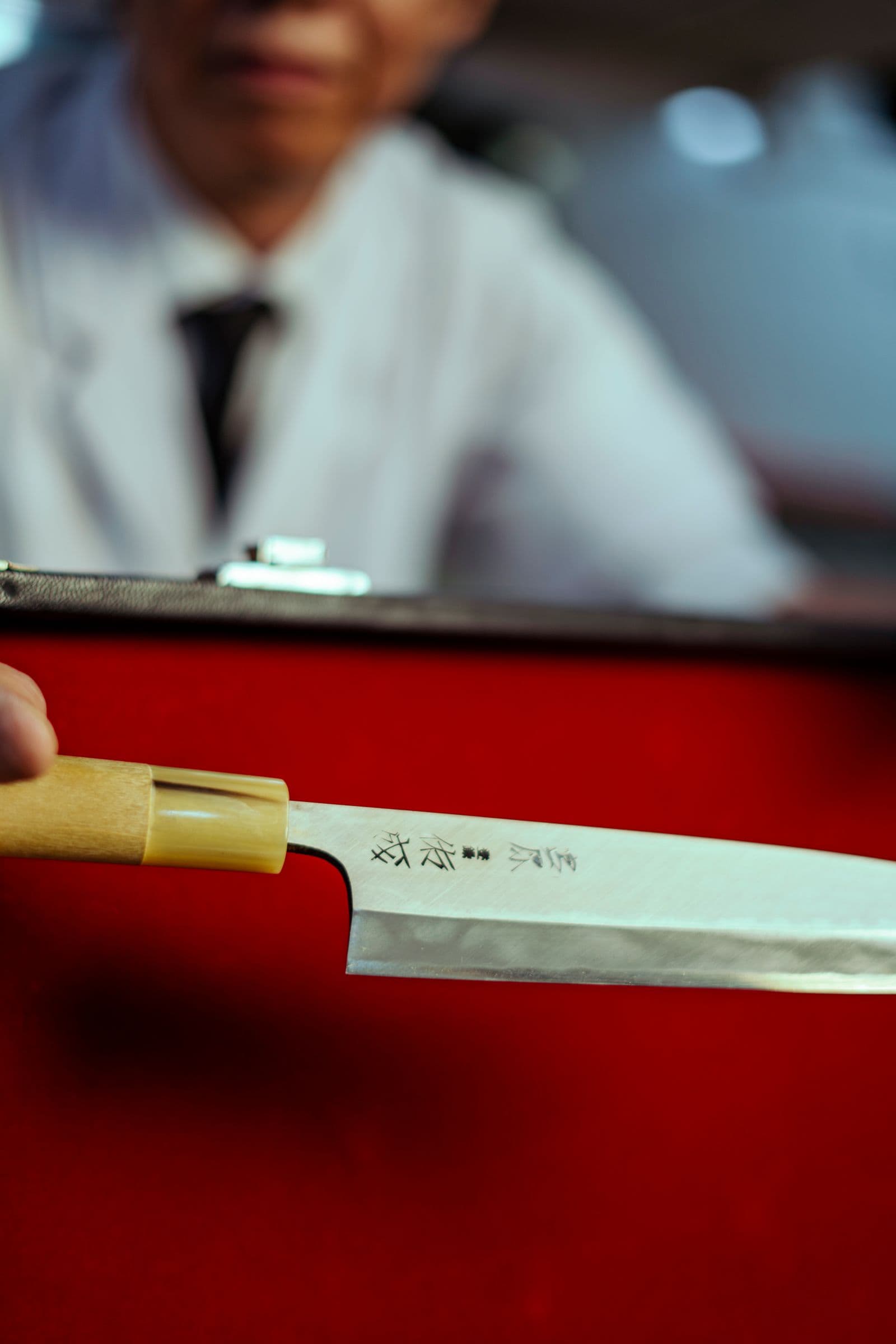
How stainless-clad works
Stainless-clad construction — usually san mai (三枚, "three layers") — takes a hard cutting core and clads it between two stainless outer layers. Sharpen the knife and a thin strip of that core is exposed at the very edge; everything else you see and touch is stainless. When the core is a reactive carbon steel, you get its keen edge and feel, while the stainless sides stay rust-free and clean-looking. Only the edge patinas.
What full carbon means
A full carbon knife is reactive across the whole blade. That means it develops a patina everywhere and must be dried completely after every use, or it spots with rust. In return it's traditional, often lighter, and — because there's no cladding — you can thin and polish the entire blade freely over decades, with no layer line and no risk of the cladding ever separating.
Side by side
| Stainless-clad | Full carbon | |
|---|---|---|
| Reactive area | Edge only | Whole blade |
| Maintenance | Low — dry the edge | Higher — dry it all |
| Rust risk | Body protected | Whole blade |
| Look | Clean, stays bright | Patinas, ages |
| Thinning over time | Limited by cladding | Freely |
| Edge performance | Carbon core | Carbon |
One thing to know
"Clad" doesn't always mean a carbon core. Many knives are stainless clad over a stainless core (like VG10) — fully rust-resistant, where the cladding is about look, cost and feel. The real stainless-clad vs full carbon question is only about whether the cutting core is reactive carbon. Always check what the core steel is.
Which should you choose?
Stainless-clad if
- You want a carbon edge with easy care
- You'd rather the body never rusts or stains
- You like a clean, bright-looking blade
- You're newer to reactive steels
Full carbon if
- You want the traditional look and feel
- You'll dry the whole blade without fuss
- You want to thin and polish it freely over decades
- You enjoy a blade that ages with a patina
The bottom line
Stainless-clad is the practical modern answer: a carbon edge where it matters, a stainless body everywhere else. Full carbon is the traditionalist's choice — more character and freedom, more care. Pick by how much maintenance you want.
Want to skip reactive steel entirely? A powder stainless like SG2 gives long edge life with no reactivity at all.
Comparing steels side by side? Our knife steel table puts all 16 in one sortable chart — hardness, edge retention, toughness, rust resistance and how hard each is to sharpen.
Frequently asked questions
What is a stainless-clad knife?
A stainless-clad knife has a hard cutting core — often a reactive carbon steel — sandwiched between two stainless outer layers (a san mai, or 'three layer', construction). Only the thin strip of core at the very edge is exposed, so you get carbon-steel cutting performance while the body of the blade stays rust-resistant and low-maintenance.
Stainless-clad vs full carbon — what's the real difference?
It's about how much of the blade needs care. On a stainless-clad carbon knife, only the exposed edge is reactive, so just the edge patinas and the stainless sides shrug off rust and stains. On a full carbon knife the whole blade is reactive, so it patinas all over and must be dried completely. Stainless-clad is much easier to live with; full carbon is more traditional and simpler to thin and polish over its life.
Does a stainless-clad carbon knife still rust?
Only at the edge. The stainless cladding protects the sides, but the thin carbon core exposed at the edge is still reactive — it will patina and can spot if left wet. So you still wipe the edge dry after use, but you don't have to baby the whole blade the way you do with full carbon. It's carbon performance with most of the stainless convenience.
Is stainless-clad better than full carbon?
Not better — easier. Stainless-clad gives you a carbon edge with far less maintenance, which suits most home cooks. Full carbon rewards those who want the traditional look and feel, a blade they can freely thin and polish over decades, and who don't mind the extra care. Choose stainless-clad for convenience, full carbon for tradition and simplicity of maintenance over the long term.
What is san mai?
San mai (三枚) means 'three layers' — a hard core clad between two softer or stainless outer layers. It's the most common cladding used for stainless-clad knives, and the visible line where the core meets the cladding is often part of the knife's look. Damascus is a decorative, many-layered version of the same idea.
Can a knife be stainless-clad with a stainless core?
Yes. Many knives are stainless clad over a stainless core (for example a VG10 core), giving a fully rust-resistant, low-maintenance knife. In that case cladding is mostly about feel, cost and looks rather than protecting a reactive core. The 'stainless-clad vs full carbon' question is really about whether the cutting core is carbon.
Choosing a knife by its steel & build?
Compare the steels and types side by side. Our curated shelf opens soon — join the waitlist to hear first.
The steel guide →