
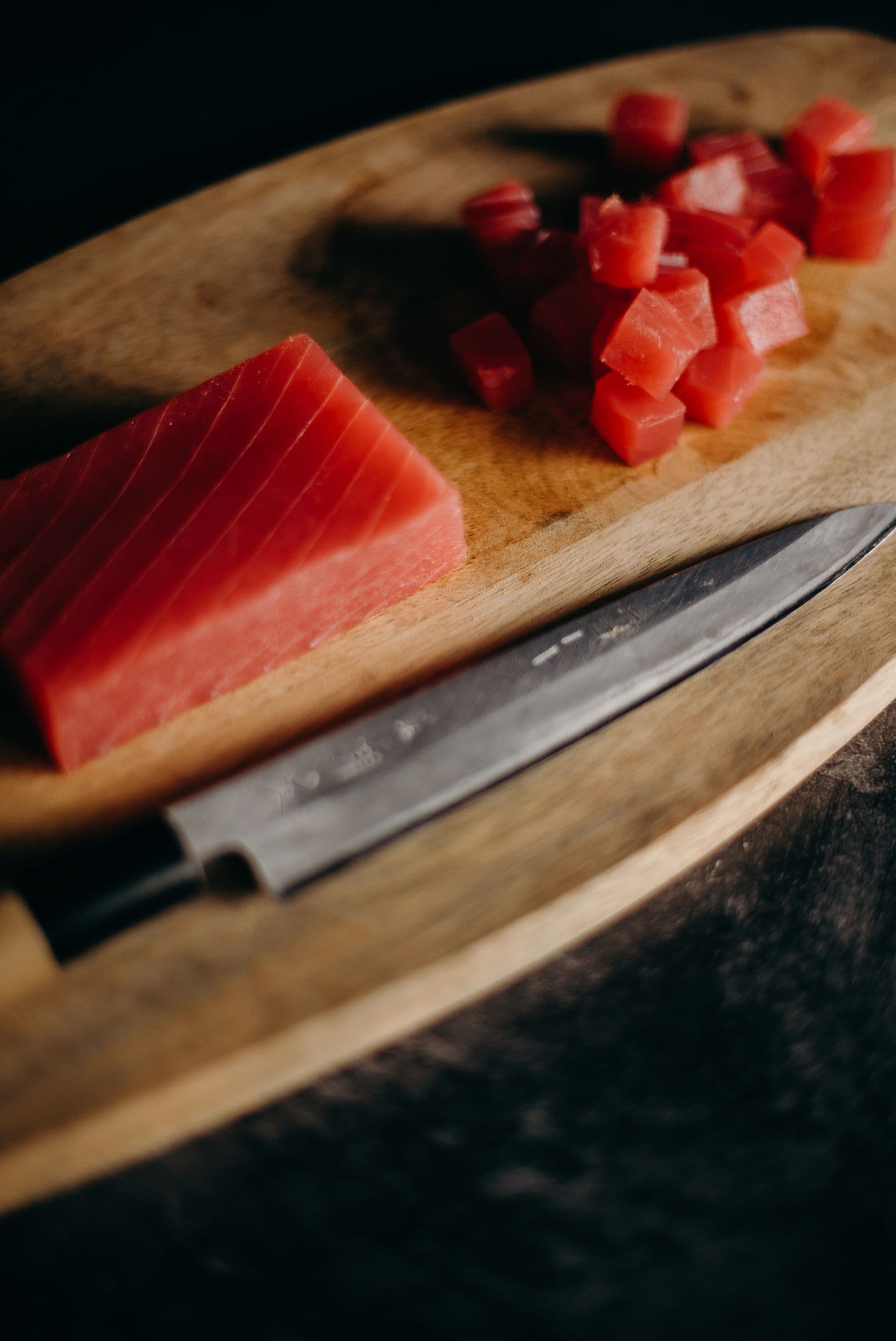
Why a gyuto can't take bone
The same things that make a gyuto so sharp — hard steel around 60–63 HRC ground to a thin, acute edge — make it brittle against impact. Bone is hard and unyielding, so the edge chips or cracks rather than cutting through, and in a bad case the tip snaps. Beyond the damage, there's a real safety risk: the blade can slip or a fragment can fly.
What to use instead
| Task | Right tool |
|---|---|
| Poultry / pork bones | Heavy (Chinese) bone cleaver |
| Whole fish, fish bones | Deba, with controlled chops |
| Jointing poultry | Honesuki (around the joint) |
| Large bones | Butcher's saw / bandsaw |
| Everything boneless | Your gyuto |
These bone tools are thick and tough exactly where a gyuto is thin and hard. Using the right one protects both your edge and your fingers.
Joints & small bones
You can separate poultry by slicing through soft joints and cartilage — not the bone — and a gyuto can do that carefully in a pinch, though a honesuki is far better. For fish, pull pin bones with tweezers and cut around the frame. The rule never changes: around bone, not through it.
The bottom line
A gyuto is a precision slicer, not a chopper of hard things. Keep it off bone, use a cleaver or deba for the job, and work around joints — and your edge stays perfect instead of chipped.
Curious which knives are built for bones and breaking down protein? See the deba and honesuki guides.
Frequently asked questions
Can you cut bone with a gyuto?
No. A gyuto is a thin, hard chef's knife made for slicing and chopping food, not bone. Hitting bone chips or cracks its delicate edge, and can be dangerous if the blade slips or the tip snaps. For bone you need a heavier, tougher tool made for the job, like a cleaver or a deba.
What happens if you cut bone with a Japanese knife?
The hard, thin edge chips — sometimes a small nick, sometimes a large crack — and in a bad case the tip can break. You'll then need to grind the chip out on a coarse stone, losing metal and time. There's also a safety risk: a knife can slip or a fragment can fly when it meets bone.
What knife should I use to cut through bone?
A tool built for it. A heavy cleaver (such as a Chinese bone cleaver) chops through poultry and pork bones; a deba's weight handles fish bones and heads with controlled chops; and a bandsaw or butcher's saw is used for large bones. These are thick and tough where a gyuto is thin and hard.
Can a gyuto handle chicken joints?
You can separate a chicken by cutting through the soft joints and cartilage — not the bone itself — and a gyuto can do that carefully in a pinch. But a honesuki (Japanese boning knife) is far better and safer for jointing poultry. The rule stays the same: cut around bone, never through it.
What about small or soft bones?
Still avoid forcing the edge through them. Small pin bones are pulled with tweezers or a fish-bone puller; you cut around fish frames rather than through them. If a recipe needs bone cut, reach for the right heavy tool rather than risking your gyuto's edge on a 'small' bone.
Why is a gyuto so easy to chip?
Because it uses hard steel (around 60–63 HRC) ground to a thin, acute edge — the very things that make it so sharp also make it brittle against impact. That's a great trade for slicing vegetables and boneless meat, and a bad one for bone. Treat a gyuto as a precision slicer, not a chopper of hard things.
Matching knives to tasks?
Compare the types side by side, or answer four questions. Our curated shelf opens soon — join the waitlist.
Find your knife →