
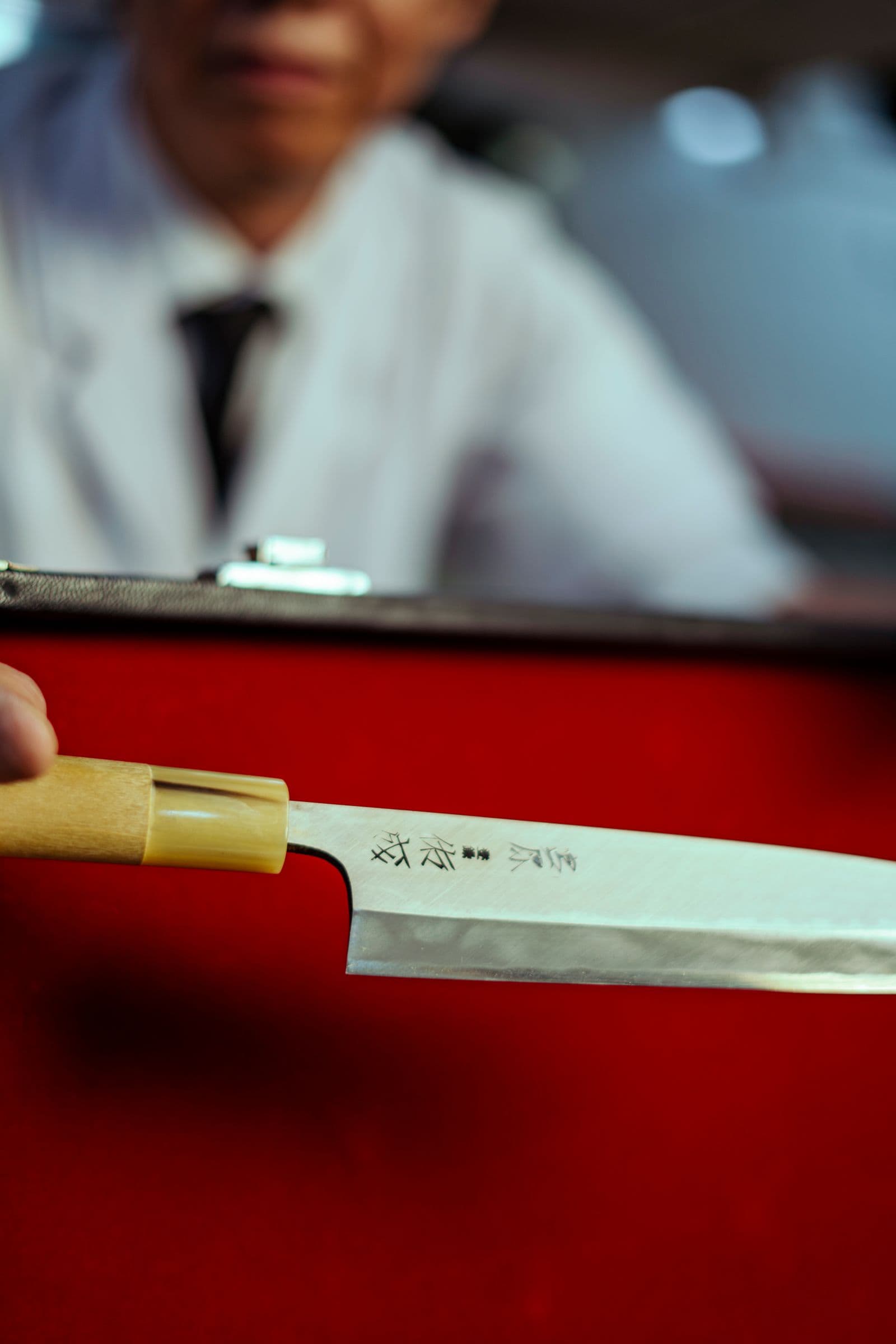
What "hand-forged" can mean
In its truest sense, hand-forged means a smith heated a piece of steel and shaped the blade by hand — with a hammer or a hand-guided press — rather than a machine blanking it out of a flat sheet (stock removal). Genuine hand-forging is a real skill, and it's central to traditional Japanese blades like a honyaki or kasumi. The trouble is that the phrase promises this without guaranteeing it.
Why the term is slippery
"Hand-forged" and "handmade" are not regulated terms. There's no standard a knife must meet to use them, so they cover a wide range — from a blade genuinely forged by a master, to one largely machine-produced with a little hand sharpening or assembly. The words are marketing until a maker backs them with specifics. Treat them as an invitation to ask questions, not as proof.
How traditional knives are really made
Here's a nuance the label hides: traditional Japanese knives are often made by several specialists, not one person. In centres like Sakai, a blacksmith forges the blade and a separate master sharpener grinds and finishes it — each doing their part by hand. So a knife can be deeply hand-made without a single individual doing everything. The handwork is real; it's simply divided among experts, which is a strength, not a catch.
What to judge instead
What actually decides how a knife performs is the core steel, its hardness and heat treatment, and the grind — none of which the word "hand-forged" tells you. Look for a named maker or workshop, a described process, and a reputation you can check. A skilfully made knife is worth paying for; a slogan is not.
The bottom line
"Hand-forged" can mean real craft — or almost nothing, because no one polices the phrase. Genuine handwork is worth celebrating and paying for, but judge the actual knife: its steel, its heat treatment, its grind, and the maker behind it.
Want to see real handwork with names attached? Meet the smiths on our makers page, or read honyaki vs kasumi.
Frequently asked questions
What does 'hand-forged' mean on a knife?
At its truest, it means a smith shaped the blade from heated steel by hand (with a hammer or press) rather than it being stamped out of a sheet by machine. But the term is unregulated and used loosely: some 'hand-forged' knives are genuinely forged by hand, while others are largely machine-made with only some hand finishing. Always look at how a specific maker describes their process.
Is 'handmade' the same as 'hand-forged'?
Not necessarily. 'Handmade' is an even looser term — it can describe a fully hand-crafted knife, or one that's mostly machine-produced but hand-sharpened or hand-assembled. Neither 'handmade' nor 'hand-forged' is a regulated, guaranteed standard, so treat both as starting points for questions rather than proof of quality.
Does hand-forged mean better quality?
Not automatically. Skilled hand-forging can produce superb blades, but a well-made machine-forged or stock-removal knife from a good factory can easily outperform a mediocre hand-forged one. Quality comes from the steel, the heat treatment, the grind and the sharpening — not from the label. Judge the knife, not the word.
How are traditional Japanese knives actually made?
Often by several specialists rather than one person. In centres like Sakai, forging (by a blacksmith) and sharpening and finishing (by a separate sharpener) are done by different master artisans, each doing their part by hand. So a traditional knife can be very much 'hand-made' without one individual doing everything — the handwork is real, just divided.
Should I pay more for a hand-forged knife?
Only if the actual knife justifies it. Genuine skilled handwork can be worth a premium and is part of what makes traditional knives special, but don't pay for the words alone. Check the steel, the reputation of the maker, and the fit and finish. A knife that performs and is made with real care is worth it; a marketing label is not.
How can I tell if a knife is genuinely hand-made?
Look for specifics rather than slogans: a named maker or workshop, a described process, the core steel, and a reputation you can check. Vague 'artisan hand-forged' language with no detail is a flag to ask questions. Reputable sellers are happy to tell you exactly who made a knife and how.
Value real craft over slogans?
So do we. Meet the four great blade-making regions. Our curated shelf opens soon — join the waitlist.
Meet the makers →