
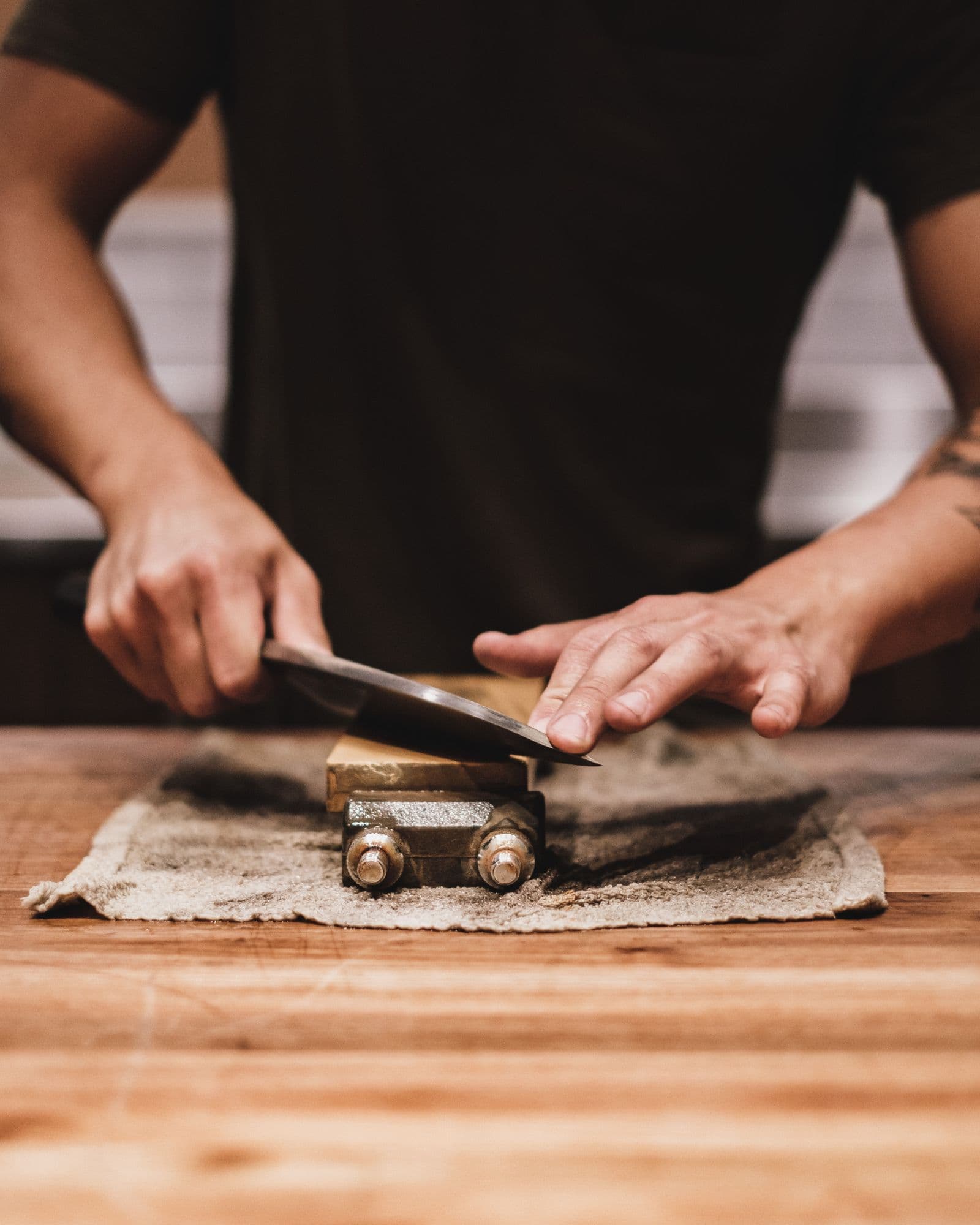
What stropping does
Stropping does three small but valuable things: it removes the last burr (wire edge) left after sharpening, polishes the very apex to a higher refinement, and gently realigns an edge that's rolled slightly. What it doesn't do is remove meaningful metal — for that you need a whetstone. Think of it as the final polish and light upkeep, not as sharpening.
Why it suits Japanese knives
A hard Japanese edge can chip on a coarse honing steel, which is why stropping (or a smooth ceramic rod) is the better maintenance tool. It keeps the edge keen between whetstone sessions with almost no risk. See honing vs sharpening for where it fits in the routine.
How to strop, step by step
Prepare the strop
Lay a leather strop on a flat surface or hold a paddle strop firmly. If you use a polishing compound, rub a little into the leather first; a bare strop also works for light deburring. Newspaper, denim or cardboard on a flat surface will do in a pinch.
Set the angle
Lay the blade flat, then lift the spine to roughly your sharpening angle (about 15°). Keep it consistent — too high and you round the edge, too low and you polish the shoulder instead of the apex.
Draw spine-first
Pull the knife along the strop edge-trailing — spine leading, edge dragging behind. Never push the edge into the leather: that cuts the strop and rolls the edge. Use light pressure; the leather and compound do the work.
Alternate sides evenly
Do a stroke on one side, then flip and do the other, keeping the count equal. Five to ten light passes per side is plenty for maintenance; a fresh-off-the-stone edge needs only a few to remove the last burr.
Test and repeat if needed
Test on paper or a tomato. If the edge still catches a burr, a few more alternating passes will refine it. Stop once it's clean and keen — over-stropping wastes effort and can round the edge.
When to strop
Strop as the final step of sharpening to remove the burr, and as light maintenance every handful of uses to keep the edge crisp. What stropping won't do is rescue a genuinely dull or damaged edge — once it stops restoring keenness, it's time for the stone, and if the edge is chipped, for a proper repair.
The bottom line
Stropping is two minutes of polish that keeps a keen edge keen. Spine-first, light pressure, alternate sides — the gentle habit that stretches the time between sharpenings on a hard Japanese blade.
Ready for the main event? Learn the stone in how to sharpen a Japanese knife.
Frequently asked questions
What does stropping a knife do?
Stropping polishes and realigns the very edge, and removes the last tiny burr left after sharpening. It doesn't remove meaningful metal like a whetstone does — it refines and maintains an already-sharp edge, both as the final step of sharpening and as gentle upkeep between sharpenings.
Which way do you strop a knife?
Always edge-trailing: spine leading, edge dragging behind, so you pull the knife away from the direction the edge points. Never push the edge into the strop — that slices the leather and rolls the edge. Alternate sides with light pressure.
Is stropping better than a honing steel for Japanese knives?
For hard Japanese steel, usually yes. A coarse steel rod can chip a hard, thin edge, whereas a strop maintains it gently. A smooth ceramic rod is another gentle option. Stropping is a great low-risk way to keep a Japanese edge keen between whetstone sessions.
Do you need compound to strop?
Not always. A bare leather strop deburrs and lightly polishes an edge. Adding a fine polishing compound (such as chromium oxide) speeds up refinement and gives a higher polish. For simple maintenance, bare leather — or even newspaper — is enough.
Keeping a Japanese edge sharp?
Read the sharpening guides, or see the knife types. Our curated shelf opens soon — join the waitlist.
The whetstone guide →