
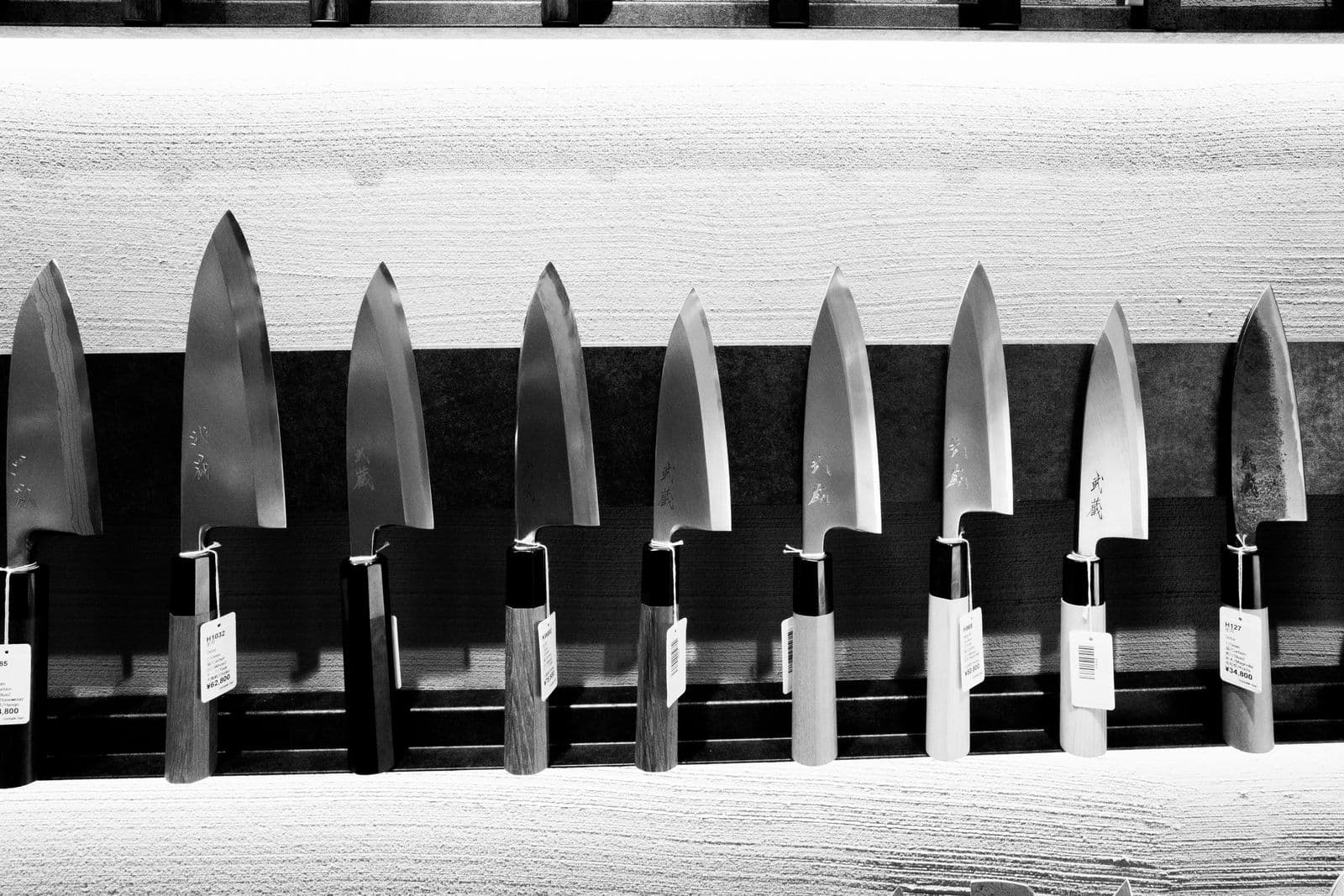
Why storage matters
A thin, hard Japanese edge chips when it hits other metal, and a damp blade rusts. Good storage solves both: it keeps the edge from touching anything hard, keeps the blade dry, and — not least — stops you reaching blindly into a drawer of loose blades. Where the knife rests between uses does as much for its lifespan as how you wash it.
The good options
| Option | Best for | Watch out for |
|---|---|---|
| Magnetic strip | Display, easy access, drying | Roll on spine-first; prefer a wood-faced strip |
| Saya (sheath) | Drawers, travel, carbon blades | Sheath only a fully dry blade |
| Knife block | Countertop, many knives | Insert spine-down; keep it dry and clean |
| In-drawer dock | Clean counters, tidy drawers | Blade held apart, not loose |
| Edge guards | Cheap protection, travel | Dry blade first; not a permanent home |
A magnetic strip is a great default — blades stay separated, visible and dry. A saya is ideal for drawers and reactive carbon steel. A block or in-drawer dock suits a bigger set.
What to avoid
Never store a knife loose in a drawer — it's the second most common way to chip a fine edge, after the dishwasher, and it's a cut waiting to happen. Also avoid sheathing or blocking a wet blade: trapped moisture rusts, especially inside a saya or a damp block.
Which is right for you?
On the counter
- Magnetic strip — visible, space-saving, dries well
- Knife block — tidy for a larger set
- Roll blades onto the magnet spine-first
- Keep everything dry
In a drawer
- Saya — best edge protection, great for carbon
- In-drawer dock or tray — keeps blades apart
- Edge guards — cheap and effective
- Never bare and loose
The bottom line
Protect the edge, keep it dry, keep it apart from other metal. A magnet, a saya, a block or a dock all do the job — a loose drawer does the opposite. Store it well and it stays sharp and safe for years.
Storage is the last step of good care. For the rest of the routine, see how to care for a carbon-steel knife.
Frequently asked questions
What's the best way to store a Japanese knife?
Any way that protects the edge and keeps the blade dry and separate from other metal. Good options are a magnetic strip, a saya (wooden sheath), a knife block, or an in-drawer dock or edge guards. The one thing to avoid is loose in a drawer, where the edge bangs against other utensils and chips.
Is a magnetic strip safe for Japanese knives?
Yes, if you use it carefully. A magnetic strip keeps blades separated, visible and dry, which is ideal. The trick is to place the knife on spine-first and roll it down onto the magnet, rather than slapping the edge flat against it — that avoids nicking the edge. A wood-faced magnetic strip is gentler than bare metal.
What is a saya?
A saya (鞘) is a wooden sheath that slips over the blade to protect the edge, traditionally made of light ho wood. It's excellent for storing a knife in a drawer, transporting it, or protecting a carbon blade. Make sure the blade is completely dry before you sheath it, since trapped moisture inside a saya can cause rust.
Are knife blocks bad for knives?
Not inherently, but slotted blocks can dull a knife if you slide the edge along the slot each time. Insert the knife spine-down where the block allows, or use a block with wide universal slots or vertical rods that don't touch the edge. Keep the block clean and dry, and never put a wet knife into one.
Can I keep a Japanese knife in a drawer?
Yes, but not loose. Use an in-drawer knife dock or tray, a saya, or blade guards so the edge is protected and the knife can't slide into other metal. A bare knife rolling around a utensil drawer is the second most common way people chip a fine edge, after the dishwasher.
Should I dry a knife before storing it?
Always. Store any knife bone-dry — moisture is what causes rust, and it's worst when trapped, such as inside a saya or a damp block. Wipe the blade dry immediately after washing, and for a reactive carbon steel a thin wipe of food-safe oil before longer storage adds protection.
Setting up your knife kit?
Our curated shelf of knives and care essentials opens soon — join the waitlist to hear first.
Browse knife types →