
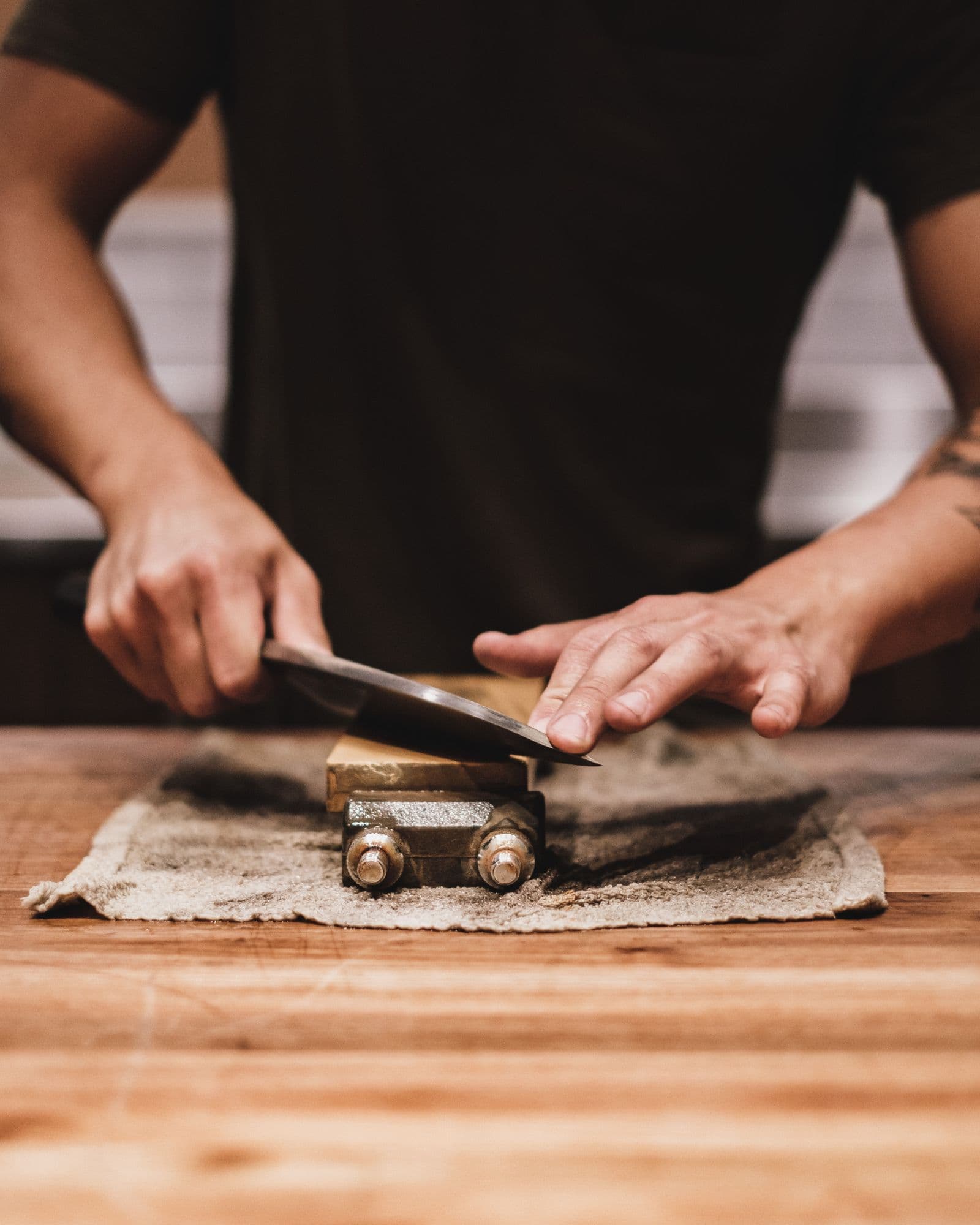
Why stones dish — and why it matters
You sharpen most in the middle of a stone, so that's where it wears — the surface slowly goes hollow (dished). A dished stone can't grind a flat, straight bevel: it rounds the edge and gives inconsistent results, no matter how good your technique. A flat stone is a quiet prerequisite for good sharpening, which is why keeping it flat matters as much as the sharpening itself.
What to flatten with
Three common options. A diamond flattening plate (like an atoma) is fastest and most durable. A dedicated flattening stone is purpose-made and affordable. Or, cheapest to start, wet-dry sandpaper (around 120–220 grit) taped to a thick, dead-flat piece of glass. Any of them works; a diamond plate is the long-term buy if you sharpen often.
Step by step
The pencil grid is the whole trick: it turns "is it flat yet?" into a simple, visible yes or no.
Soak or wet the stone
Prepare the whetstone as its type requires — soak a soaking stone, or splash-and-go for a splash stone. Wet the flattener too. Flattening is done wet, so grit and slurry wash away rather than clog.
Draw a pencil grid
Scribble a grid of pencil lines across the whole surface of the stone. This is your progress gauge: the low (dished) areas keep their pencil, while the high areas lose it first. When every line is gone, the stone is flat.
Rub against the flattener
Hold the stone flat against a diamond flattening plate, a dedicated flattening stone, or wet-dry sandpaper on thick glass. Move in circles or a figure-eight with even, moderate pressure, covering the whole surface — don't favour one spot.
Check the pencil marks
Rinse and look. Areas still holding pencil are the low spots; keep going until all the marks have disappeared evenly. Rinse away the slurry as you work so you can see clearly.
Chamfer the edges (optional)
Lightly round off the sharp top edges of the stone with a few strokes on the flattener. This stops the corners chipping and keeps them from catching your knife's edge during sharpening.
Rinse and store flat
Rinse the stone and your flattener, then let the stone dry and store it flat and out of freezing conditions. Flatten little and often — a quick pass every few sessions is easier than fixing a badly dished stone later.
How often to flatten
Softer, coarser stones dish quickly and may want flattening every session or two; hard finishing stones far less often. The habit to build is little and often — a quick pass when you start sharpening keeps the stone true, and it's much easier than rescuing a stone that's gone deeply hollow.
The bottom line
A flat stone is invisible when it's right and ruins everything when it's wrong. Pencil-grid it, rub it flat on a plate or sandpaper, and do it often — your edges will thank you.
With a flat stone sorted, brush up the main event in how to sharpen a Japanese knife and, if you are still choosing stones, which whetstone to buy.
Frequently asked questions
Why do I need to flatten a whetstone?
Because stones wear hollow (dish) in the middle with use, and a dished stone can't sharpen a straight, consistent edge — it rounds the bevel and makes results uneven. Keeping the stone flat is essential for good sharpening, so flatten it regularly rather than waiting until it's badly dished.
What can I use to flatten a whetstone?
A diamond flattening plate (such as an atoma), a dedicated flattening stone, or wet-dry sandpaper (around 120–220 grit) taped to a thick, flat piece of glass. A diamond plate is the fastest and most durable; sandpaper on glass is the cheapest way to start.
How often should I flatten my whetstone?
Little and often. Softer, coarser stones dish faster and may need flattening every session or two; harder finishing stones far less often. The pencil-grid method makes it easy to check — if the stone looks or feels hollow, flatten it before you sharpen.
What is the pencil grid method?
You draw a grid of pencil lines across the stone before flattening. As you rub the stone on the flattener, the high spots lose their pencil first and the low (dished) spots keep theirs. When all the pencil is gone, every part of the surface has been touched equally, so the stone is flat.
Getting into sharpening?
Read the whetstone walkthrough, or see the knife types. Our curated shelf opens soon — join the waitlist.
The whetstone guide →